Tuesday, December 3, 2013

Christmas Time: Gift Giving

This holiday season, let your children experience the joy of giving. You can try to teach them … or you can step back and let them learn!

Spark some interest in some of the great organizations that are gathering gifts for the less fortunate. Let your children know that they can help make the holiday special for someone else … elves come in all shapes and sizes! Let them know that they can be "helpers" to spread the Holiday Spirit.

Then, find or work together to make a container that will become a focal point for gathering loose change (and good thoughts!) during the next few weeks. You might take a holiday tin or a special basket or decorate a gift bag … whatever you decide to do will be great!

Next, have your children check around for change in pockets, junk drawers, cars, and the sofa cushions :) It will be amazing how the change adds up! When you go to the store or come home from a day's outings, help your little ones to "find" the change and put it in the container. When you're ready, take that change to the bank or grocery store change counter. If you're not near one of these, or just looking for practice counting coins, you can separate and roll them up yourselves!

You will have enough saved up to go shopping, big or small, for someone who might not have much for the holiday. My little ones always like to pick something for someone their own age, but take your child's lead! Remember to reflect on the giving :)
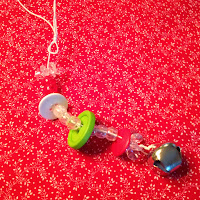
While you're waiting for the coins to pile up, create some one-of-a-kind sparkling ornaments to share along with your gifts. You'll need some chenille sticks or florist wire, some jingle bells or small buttons or charms, and beads of any and all colors and shapes.


At one end of the wire/pipe cleaner, attach an anchor of some sort - we had some jingle bells, so we used them. Then, let your child create a masterpiece, adding things until its about one-third full. Twist the remainder into a loop for hanging and you have a beautiful ornament/door hanger to give away! (Make another for a great gift for grandparents or someone special!)

Have fun!!

Saturday, November 30, 2013

Christmas Time: Trim a Tree

When it's time to get in the spirit of Christmas, little ones like to make some fun themselves!! Let them experiment with these cute trees, making ornaments, magnets for the fridge, or even gifts ... handmade gifts are always well-received :)

To get started, you'll need some tree shapes cut from fun foam - you can pre-cut your own or pick up a pack at fabric/craft stores. Have on hand some plastic beads, shiny stickers or sequins, sticky foam pieces or cute colored buttons. Teach your child, using a white glue squeeze bottle, how to make small "baby" dots of glue and then have them pick a few places where they want to place a "decoration." Keep adding until each tree is just the way your little one wants it! When complete, they should be left to dry on a flat surface.

While you're waiting for them to dry, get in some counting practice - count up the ornaments on each tiny tree. Use leftover beads or buttons to play a pattern game … lay out a two or three part pattern and see if your child can continue it with "what comes next?" Then, if you're making your tree a gift, design a gift tag or a card to put it in. Gift giving teaches lessons about sharing and thoughtfulness that are wonderful to pass along to your children. Spending time with them and sharing experiences is the best gift of all!

When the trees are dry, decide whether you want to punch holes or glue on ribbon loops to hang your trees up as an ornaments or holiday decorations, or attach magnets to the back to hang on your fridge. Either way, you have some cute new crafts made by your fabulous kiddo artist!

Have fun!

Sunday, November 3, 2013

Thankfulness: A Thanksgiving Project!

Saying thank you is a wonderful way to build social skills with your child. Whether your child received a gift or had a wonderful visit with someone, a homemade thank you card is the way to go!

Fold some paper in half - construction or computer paper is fine … or look for cool card stock papers, available at your local craft store. Show your child how cards typically open, book-style, and show them how words go in a left-to-right progression.

Then, go on a letter search - use all those catalogs that are coming in the mail! Help your child find all the letters to make the words "Thank You!" and get some cutting practice in … so good for small motor practice! Your child can arrange the letters on the card, practicing that left-to-right progression again, an early reading skill :) When thats done, help brainstorm what to say.

Thanksgiving time is also a great time to practice these skills! Get your child in the habit of looking for things to be thankful for - it can be a lifelong thing! And … so many other skills come into play with a project like this!

First, you and your child will use language and planning skills to come up with a list of things to search for that your child is thankful for. Then, hone small motor and visual discrimination skills while searching for pictures and words that fit your list. Get out your scissors and cut, practicing small motor skills. Now, make a placemat of things that your child is thankful for. It could be laminated for use at the table on Thanksgiving - and beyond!


Your child will delight in finding photos and words that represent things he or she is thankful for! (And get lots of practice at so many things!) You could even make it a counting project … add a new thankful thing each day :)

Have fun!

Sunday, October 27, 2013

Making Friends: Books to Read

Such a big part of the early years is moving beyond the world of self into the world of friends. Just as we learn many other concepts, our young ones need "friend behavior" modeled and practiced to get started.

Make time for interaction with other children - get out, go for walks, stop and check out areas where your children might spend some unstructured time with others. It doesn't have to be a special dance or sport or art class - although these can be great fun, too! The important thing is that your child gets a chance to mingle and learn what is expected behavior with friends and what isn't! Practice makes …
well, maybe not perfect, but better :)

As another strategy, read to your child from consciously selected books about friendship. There are so many wonderful books that allow children to see characters whose feelings mirror their own, giving them voice. For little ones, the Rainbow Fish books by Marcus Pfister are great, as are the Bear books by Karma Wilson. They have simple language and engaging illustrations, just right for teaching things like sharing, making friends and caring for our friends.

For older children, Chrysanthemum by Kevin Henkes is a personal favorite. Children can see what bullying behavior looks like and sounds like, and will vow never to be like that! Chester's Way, another Henkes story, is also fantastic for friendship themes like taking turns and having more than one friend.

For a list of books on making friends, click on:

https://www.themeasuredmom.com/books-about-friendship/

Reading about these themes opens the door for discussion - never let an opportunity get away to help your child develop these much needed social skills.

Above all, have fun with it!

Wednesday, October 16, 2013

Great Halloween Reads!

Halloween is a fun time - and a fun time to read some GREAT stories!!

Two of my favorites to look for:

Too Many Pumpkins!
by: Linda White / Megan Lloyd

This story teaches on so many levels! Work on sequencing with the story of pumpkins growing, from splattered pumpkins to sprouts to vines, etc. Show how it becomes a circular story, with the seeds at the end of the book. The pumpkins' growth, despite not being wanted or cared for, is displayed through the book's interesting artwork and wonderful words.

There is also the deeper story of the book's main character moving from an isolated, unhappy life to having an entire group of neighbors who join her for Halloween festivities. "Too Many Pumpkins" is a consistent favorite with little ones up through primary grades.

Pumpkin Jack
by: Will Hubbell

Kids love this book! Any child who has had to throw out their pumpkin after Halloween will appreciate the way Tim disposes of his pumpkin - in the garden. It has great lessons about the after cycle of the pumpkin's life ... From a Jack-o-lantern to a mushy mess to a snow-covered mound. Then, in the Spring, new life brings Jack (and many others!) back to the garden! Great illustrations and  descriptive metaphors that kids can understand make this a book to treasure.

Have fun reading!!

Wednesday, June 26, 2013

Summer Journals

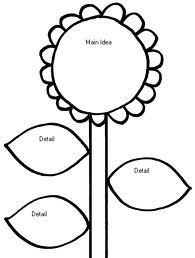
Summertime is a great time for your children to launch or practice their skills as writers. Grab a journal and help them keep track of things that you do, places you go, special times. Whether your children sketch a bit, dictate thoughts or even write a few words, the process of brainstorming and writing about their experiences and feelings will help them develop skills needed to become writers. Using simple graphic organizers is a great way to gather ideas and your children will enjoy deciding on things to include.


Start out by letting them choose or personalize a journal or writing notebook. Maybe they'd like to put some photos on the cover or cut some big words or pictures out of magazines. Encourage them to express what they feel. Try to make sure that there is time set aside for journaling on a regular basis to get in the habit of recording those thoughts.

Don't focus on the mechanics so much in the beginning ... just get some ideas on paper. Once you've captured some initial ideas, you might go back and add to the writing, through interviewing your child or rereading and asking, "What else did you want to say?" or "Why was that important to you?" You can always go back later to choose things to work on together, through revising and editing.

"YOU are a writer!!" Say this often to your children and they will indeed become writers! Getting those ideas is a big part of the process - the rest will come in time!

Have fun!


Monday, June 24, 2013

Early Learning: Math Skills

Whatever developmental stage your child is at, it is never too early to introduce a little math play. Numbers are a part of everyday life and your child will be more comfortable with them when school starts if they're presented that way :)


I tell my little ones that Math is like magic, and then I show them some of the "magical" patterns you can make with numbers! Even finding patterns on a calendar can seem like magic when you're little - we take out our calendar number cards and try to make up new color patterns - one side is red, the other black! Let your children experiment with numbers, using cards or little magnets, and see what interests them.

Use your child's sense of rhythm and love of music to "hear" Math - clap patterns and count beats while you're singing and dancing! Make up some new beats and play "Follow the Leader" with clapping. Magic!

Block play can be a math lesson - making towers with two different colored blocks (patterns, sequencing) and then counting them up (one-to-one correspondence) sneaks math into a favorite pastime!

Continue counting other objects, noting one-to-one correspondence. Count fingers, toes, toys, cookies, cars ... you get the picture! Encourage your child to repeat the numbers and practice counting on their own, when they're ready.

Older preschool and school-aged children can work on solutions to simple word problems, using a group of like objects. You might put together some buttons, blocks, small figures - and get ready to practice some Math facts. If Mom has two Legos and You have three, how many do you have together?


When they've mastered that, try this!

First, count out a total number of objects - start small with a number like 5. Then, separate this amount into two groups ... Let's say 2 and 3. Record the number of objects in each group and practice writing the numbers. Relate the written numerals to the number of objects and have your child practice counting each one. Make a simple number model to represent what you're playing with: 2+3=5.

 
Now, put the objects back in a pile and separate again into different groups - 4 and 1. Try the same thing, recording the numbers, and notice the total. Write a new number sentence. Make sure to notice how the two different groups add up to the same number! See if you can find other combinations - then, try a new number. If you line up all the math facts on a piece of paper, your child will be able to notice some more Math "magic!"

All these Math games will give your child some "number sense!"

While you're at it, have fun!