Showing posts with label summer. Show all posts

Thursday, August 27, 2020

Q Camp: Getting Some Final Summer Fun In!


It's getting close to the end of the summer here and there are still many restrictions in place. Looking for at-home things to do? Here are some links to throwback posts that gather some fun activities together for you :)

#1: One favorite, which is low to no-cost, is "painting" with water out on the hard pavement - sidewalks, driveways, whatever you have :) Here's a link to fun water painting activities:

https://makeearlylearningfun.blogspot.com/2015/08/water-painting-fun.html


#2: Plan some food fun for a rainy day :) Playing with food is usually discouraged but, using what you have in the house, you can figure our some fun "lessons" that encompass math, art, science, etc.

https://makeearlylearningfun.blogspot.com/2015/08/an-apple-is-not-just-apple.html


#3: Literacy for the win! Look for a great book to build a fun activity with! Remember, YouTube can help out with finding books, if you don't have it or don't want to mingle to get it! Googling images will put the cover pics right in front of your child :) It's great when interest in a story generates an extension activity - check this post out for some literacy and small-motor fun!

https://makeearlylearningfun.blogspot.com/2018/08/books-to-love-commotion-in-ocean.html


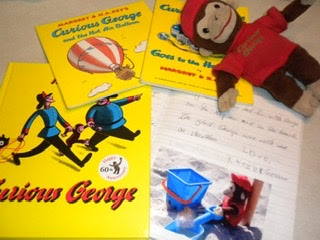
#4: Character book bags can be so much fun! Team up with a few friends to try out this activity - friends who haven't seen each other or might be remote learning might enjoy this interaction by dropping off and circulating a character or two :)

https://makeearlylearningfun.blogspot.com/2011/08/character-book-bags.html     


#5: This post, entitled "Summer Fun!," gives you a bonus - 10 more ways to extend your summer fun!

https://makeearlylearningfun.blogspot.com/2011/07/summer-fun.html


End your summer with a great week! And - have fun!!


Saturday, July 18, 2020

Q-Camp: Plans for Tired Parents :)

This 2020 is an unusual year! You may be running out of ideas to keep your kiddos busy and engaged, which BTW is always ok - because children do their best work when it is born out of a quest for SOMETHING TO DO!!

But still, it's already been a long spr-ummer already, right?!? So, kids being kids ... they (and you!)  are still looking for stuff to do :)

I've tried to group some old posts together to make it easier to do a week's worth of fun and interesting activities with, hopefully, the kiddos doing most of the "work"! 

Day 1: Click here for some tips on fun Outdoor Play - using what you have to build and play on an obstacle course will get your child's creative juices working and have them think about everyday objects in new ways ... and it's great exercise! They can redo it again and again, practicing good social skills (if they have a partner) and design skills. Of course, some supervision is needed to ensure safety :) Don't pass up everyday opportunities for sidewalk curb balancing and hill rolling :)


Day 2: Let your kiddos experience Math concepts in a whole new way - Math with Water Play - great for a warm, dry day :) Let your kiddos collect an assortment of "tools" from around the house and see what happens. Maybe with a little starter exercise, they will take the play in new directions :)


Day 3: A little reading goes a long way, depending on your book choice. Reading to cool off is great for any day - rain or shine! You can cozy up for some great illustrations, and fun, silly words, but be ready to have your kiddos act out the shakey-shakey part :) Acting out and retelling stories are a great tool for comprehension, so play away!


Day 4: Mail Call! Use those rainy or too-hot days to craft some mail for relatives. Great way to reach out in these isolated times :) and children of all ages an abilities can participate! Younger friends can draw a picture and olders can write as best as they are able. These cards and letters are sure to be treasured and - maybe, just maybe, they'll write back!!


Day 5: Ocean Animals are always fun! Check out these simple craft ideas and great reading options - you can usually find titles on YouTube if you don't have access otherwise :) Pairing crafts with stories extends the literature and helps to solidify the story for young readers :)


Have fun!! 


Tuesday, July 19, 2016

Moving and Shaking Outdoors

There is nothing that can take the place of good old-fashioned outdoor play!

Rolling in the grass, climbing in trees or on playground equipment, and balancing on low walls or curbs all help your children develop the balance and gross motor skills they need for so many daily activities. Movement of the body and development of those core muscles may even help with their stamina and ability to focus and attend to tasks. These actions can also give little ones the sensory experiences that they don't get enough of in today's plugged-in world :)

Allow your child to make choices and try things that push them a little out of your comfort zone. Explore new playgrounds or see opportunities for exploration in a daily walk through the neighborhood. Outdoor or active play gives your children areas to try out new skills. Choose a safe environment, but with room to explore and move freely, and let your children set the tone.

Let your kiddos strengthen their growing muscles by pulling up or hanging upside down on playground equipment or sturdy tree limbs. Let them try out some hanging ladder-style bars - even making it a little way across will seem like a great accomplishment ... and then help them set goals for how they will improve through the summer :) Balance on a curb, or sidewalk edging.

Even though your children may be great walkers or even runners, crawling is still great exercise for your little ones. Group or single play obstacle courses are fun to set up, change up, and explore! Crawl around or under some backyard chairs or tables, hop over some garden stones, walk along some patio blocks ... you get the picture!

Remember rolling down grassy hills? So much fun! Make sure your kiddos get to experience barrel rolling down hills and across grassy areas - it is good for their bodies to exercise and get the stimulation that occurs naturally through these simple activities.

When you're all worn out, lie out on some cool grass, look through some leafy trees - there are lots of moments that can be great for conversation with your little ones - unplugged, relaxed, and open ended :)

Have fun!


Thursday, July 14, 2016

Math with water!

One of the BEST things about summer is that you can get wet and messy ... and, then just clean up outside!

Playing with water as an open-ended activity can present your child with many different learning opportunities - and lots of fun! The math lessons and practice with language concepts will take place organically :) while fulfilling so many of the core learning concepts that we want kiddos to explore.

I like to have an inflatable baby pool on hand, but any kind of tub or container that holds water will do!


First, make sure you have different sized containers available for pouring and measuring. Model how to pour from one to another, or just let your kiddos figure it out. They will soon see that some containers can handle more water and some less ... and what happens when you pour from larger to smaller and vice versa. There is no better teacher for this type of measurement than hands on experience!

Next, play with a variety of objects to establish a sink and float lab. Provide some interesting household objects - plastic dishes, spoons, corks, colanders and funnels, etc. - and show how some will sink and some will float. Let your little ones try different things and put them in categories ... another math skill!

Float a few rubber duckies (or whatever small floaty toys you have handy!) in the water and count them out as you go. Matching objects with the numbers that represent them is an early skill to hone, and you can sing as well ...
"One little, two little, three little duckies ..."

Then, start to play a game that uses positional words - over, under, next to, etc. - and let your child take the lead, coming up with new ways to display the ducks (or balls, or boats, or whatever). This practice with verbalizing the positional concepts will help your child become more familiar with the words for each.

Let them come up with new ways to play - filling up and draining the containers, splashing and pouring, floating different toys - all will teach new lessons, and make for hours of fun! Don't forget to provide some clean paintbrushes to paint on hot sidewalks or decking, making shapes, lines, and even beginning to practice letters and numbers :)

A tub of water + lots of fun = tons of authentic math learning!

Have fun! 

Sunday, August 16, 2015

Water Painting Fun!

The last days of summer are coming fast ... running out of things to do with your little ones?

If you have some water in a bucket and an old (or new!) paintbrush - find a surface like a sidewalk, driveway, or concrete steps, and see what happens. Fun for the pool, too!

They may want to paint the whole surface. They may begin to make shapes or squiggles ... all great for motor planning and control!

You can model a little, if you want ... in a parallel playing sort of way :) Draw a letter - maybe the first letter of their names. Something about wet letters gets their attention. Use different sizes of paintbrushes for different effects.

You can also make chalk shapes, letters, numbers .. and, then paint over them. Any "mistakes" quickly evaporate and then, they can do it again! This would be great practice for back-to-school - getting familiar with names, shapes, numbers, etc. - in a very no-fuss, enjoyable way :)

Have fun!

Sunday, July 26, 2015

Books to Love: "Wet Dog!" by Elise Broach, illustrations by David Catrow

Every time I pull this book out to read, my kiddos go nuts over the pictures, even before I can say the title. Everything about this book makes you smile. David Catrow's fluid, detailed illustrations draw in the reader, and the use of rhyme and rhythm in Elise Broach's storytelling makes them want to join in ... and, they do!!


There are repeating lines that become group chants and the excitement grows as the story unfolds and your little ones start to anticipate what will happen next. Predicting and sequencing the appearance of each story element will add to the fun - and is a great comprehension tool!

This is a great read for the hot, summer days - you can almost feel the droplets of water as the wet dog shakey-shakes off :) After reading, go back and find all the delicious, descriptive ways that show how hot the main character is ... There are so many, you will lose track.

Make sure you spend some time poring over each new setting, as it is introduced. The details are amazing! There will be some recall at the end, as you and your little ones put the pieces together for the culminating scene. This fun book will quickly become a new favorite. :)

Have fun!


Friday, July 24, 2015

Social Skills: Play!

Have fun in the summer - and, use the time to make sure you are exposing your child to new, playful social situations, to prepare the way for school :)

Make a trip to a park or community pool ... or, just take a walk down the street to meet other children  for your child to spend some unstructured playtime with. Playgroups or play dates are also a good option, as long as there is plenty of free interaction between children. To get started, pull out some water toys or set up sand construction tools ... all you really need is some plastic cups and shells or pebbles. Then, let your child imagine what to do with things they find - and share with a new friend! Playtime is their "lab" for discovering what works and doesn't work when forming friendships and working together on projects.


Getting in some non-screen, active time will help your child develop skills such as decision making, planning, sharing - all skills needed in a group setting, like school. The ability to make choices on their own, and to share toys or play cooperatively, are developed over time, in natural play settings. Little ones develop these skills through trial and error, so let them explore :)

In today's world, there are many choices for children's activities that are technology-based, which do not always involve daily interaction with peers. While these may be a favorite part of your child's day, they can detract from building social skills, if used too often. Interactive play time also helps develop your child's speech and language skills, as well as their dexterity in handling objects and art materials.

The more variety your child is exposed to, both through experiences and with handling different toys and art materials, the more they will continue to grow! Keep it simple - there are so many easy ways to inject a little group fun - sidewalk chalk, bubbles, rock and popsicle stick building projects ...

Have fun!

Sunday, July 20, 2014

Mail Call!

Mailing letters is so exciting for your little ones ... and so is getting mail in return! Even in this age of electronic everything, the simple act of making a card or writing a note and putting it in the mail can be fun ... and be a great literacy activity for your child!

Grab some paper, stampers, markers, stickers ... whatever your child would like to work with. Let them exercise their small-motor skills cutting or folding. Talk about what they would like to share, brainstorming ideas, and come up with a short list of topics. This discussion helps your child begin to organize their thoughts, establishing an order of operations for getting thoughts on paper.

Let your child do as much of the writing as possible. Sometimes a picture or illustration makes a great prompt for telling about an activity or trip. Depending on their age and skill level, your child may be able to write some words, or dictate to you what they would like to say. Enclose the picture or your child's illustration to complete the message. Don't forget to have them sign it!

This could be a great summertime activity ... writing from home, or postcards from vacation! Make sure to ask questions in the letter, and to request return mail, if possible - you might want to send a few out, hoping for some to find time to respond :) Take a trip to the post office and pop it in the box - talk about how the mail takes it's own trip!

Get started - and, have fun!

Monday, June 23, 2014

Mindful Fun in the Summertime!

I've been reading a lot about mindfulness lately ... being in the moment isn't always the easy way to do things, but the benefits are amazing!

Whatever generation you are raising your children in, there have always been distractions from being able to live in the moment and teaching your children with simple things, daily things, that are organic and part of your day. Whether it is housework, laundry, careers, parents, health concerns ... all of these take our attention and use up part of our brain ... and now, it's also screen time. I'm guilty! I probably don't go an hour without looking at either my phone or my iPad.

If you fit this profile, try this ...

As you go through the day, check out what is happening right in front of you. When you're making toast, watch as the butter melts on the bread - have your child notice the heat and what happens. Have your child set the table, counting out forks and spoons as they go. Practice pouring with your little ones and see how quantities fit into different sized and shaped containers. Be mindful of the lessons your child is exposed to through these everyday activities. Build vocabulary by talking and questioning through these "lessons."

Apply the same mindfulness to your summer fun time! Toes in the water - notice how it makes your skin change, how the water droplets can make a rainbow, what the bubbles in the sand are from... Pre-swimming lessons - breathe deeply, see how the air puffs out your body, feel how the air pushes out, float on the surface ... Garden play - watch a bug work, see the buds appear, spread the dirt out and examine the crystal and shiny rock pieces... slow down and smell the roses :)

Look for opportunities as you go through each day to bring focus to the activities at hand. Each simple activity gives your child the opportunity to develop language skills, social skills, and motor skills. It helps them connect experiences and knowledge. Practicing mindfulness in your own life shows your child, through modeling, how to do this themselves. And, it's good for you!

Have fun!

Wednesday, June 26, 2013

Summer Journals

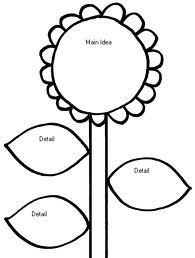
Summertime is a great time for your children to launch or practice their skills as writers. Grab a journal and help them keep track of things that you do, places you go, special times. Whether your children sketch a bit, dictate thoughts or even write a few words, the process of brainstorming and writing about their experiences and feelings will help them develop skills needed to become writers. Using simple graphic organizers is a great way to gather ideas and your children will enjoy deciding on things to include.


Start out by letting them choose or personalize a journal or writing notebook. Maybe they'd like to put some photos on the cover or cut some big words or pictures out of magazines. Encourage them to express what they feel. Try to make sure that there is time set aside for journaling on a regular basis to get in the habit of recording those thoughts.

Don't focus on the mechanics so much in the beginning ... just get some ideas on paper. Once you've captured some initial ideas, you might go back and add to the writing, through interviewing your child or rereading and asking, "What else did you want to say?" or "Why was that important to you?" You can always go back later to choose things to work on together, through revising and editing.

"YOU are a writer!!" Say this often to your children and they will indeed become writers! Getting those ideas is a big part of the process - the rest will come in time!

Have fun!


Tuesday, June 18, 2013

Early Learning: Summer Skills

Keep your child's skills up over the summer with some simple, everyday activities!

Play! Set up some unstructured play time for your children, when they can interact with others and create, collaborate, and converse. Open-ended play works well to allow children to discover new uses for things and lets them learn to play with others. Genuine conversation will help your child develop and practice language and social skills.

Explore! Find a new park, examine the details on your usual walks, try a new route when you're going somewhere ... All these will open up your child's world a little, without breaking the bank. If you can get in a day trip or two, find child-centered, child-friendly spots to visit. Zoos, farms, playgrounds, music and art events will all give your child new experiences to draw from.

Move! Singing and dancing your way through the day will help your child remember all sorts of things. Pairing facts with music has been shown to help memory ... sing songs about the weather, the days of the week, counting songs, ABC songs! There are so many out there! Some of my favorites come from www.drjean.org.

Count! Count everything you see. Use one-to-one correspondence when you count, assigning numbers to each item. Encourage your child to do as you model. Count forward and backward ... count steps, cookies, Legos - add them up and then take some away. Make it fun and have your child make up number stories, too!

Read! Read aloud, listen to reading, talk about reading ... In short, make reading a daily event! Your child will benefit from reading all sorts of books with you. Picture books, fiction stories, non-fiction informational texts ... Whatever catches their eye! Pair a fiction book about their favorite animals, bugs or dinosaurs with a vivid pictorial non-fiction book and have them discover and talk about the differences. You will be amazed at the discussions you can have, even with little ones.

Have fun!!

Monday, July 23, 2012

Summer Olympics Fun!


There are so many fun ideas to play with that are Olympics-related and that will inspire excitement in your children!!

Start with checking out all the internet action already going on to get them aquainted with what sports and athletes they might be interested in. Check out the live feed from www.nbcolympics.com or get lots of info at www.olympic.org ! Google "Olympics" for more sites ...

Then ... do some training and competition! It is so important for children to have lots of exercise and physical movement - get out there and make it happen! It's easy to put together a simple program of activities using items you may already have around the house or classroom.

See what you can come up with ... when we did the Winter Olympics, we set up a card for each  "competitor," with different stations for "events" like sock skating and olympic ring toss (hula hoops and bean bags!). If you do a few games or exercises each day, you can stretch it out over a few days or a week - culminating in a Closing Ceremony of your choice!

Crafts can be simple:

For olympic rings, you'll need paper, paint (representing each of the five colors) and small paper cups! Hold the cups upside down, dip in paint and print circles galore!


For a related art project, make Olympic torches! Trace children's hands on flame-colored tissue paper - red, orange, yellow - one set of each if you can! Wrap a paper roll with black paper or have them paint them black and then attach the hands to the top - now you have Olympic torches!


Make some hand-made medals together, going over the five colors of the rings - every country participating, at the time the logo was developed, had at least one of these colors in its flag! The five rings represent the five continents (North and South America were considered together at the time, Europe, Africa, Asia and "Oceania") of the world - and the fact that they are all joined together for "unity" - kids understand that concept!


I like to finish off with individual photos of my Olympic athletes, standing in front of a flag, wearing their hard-earned medals - and huge smiles! They make a great keepsake - and, who knows, maybe it will be part of their own Olympic profile someday! :)

(Parts of this post are adapted from previous posts on the Olympics - I wanted to get it all together :)

Have fun!!

Monday, June 25, 2012

Water Play!

Water is so much fun to play with - and a great learning tool, too!! It can be a fun mess, though, so summertime is a great time to do it, if you're worried about getting your floors, tables, clothes wet! Just take it all outside!


You do not need a fancy water table (although there are some great ones out there!) or a great amount of water. I've done these activities with a small basin of water, in sinks, or in little blow-up baby pools in the yard. You can do it with one child or a few, just watch, as always, for safety around water!

Here are my Top 5 Water Play activities:

1. Sink or Float: Gather up, with your child, a variety of objects that can get wet. They can be kitchen utensils, blocks, toys, fabric, sponges, .... anyything you have on hand! Your child can experiment with how these things interact with water ... Do they sink? Do they float? Do they expand and take on water? There are so many things your child can learn from this type of play, as well as having fun while doing it! Children will be observing, interacting, making connections - scientists at work!

2. Measure Up: Make available some containers - save yogurt, milk, margarine containers - and some measuring cups or small pitchers. Anything that will hold and pour water will do. Let your children discover how to fill containers using other containers and encourage them to see differences in size - "Look, it took you two scoops with the yogurt container to fill the margarine tub!" Watch as they count and size containers, determining smallest and largest, less and more, and be sure to name those concepts for them as you go! Join in to model new activities, as needed, but let them be the ones making the discoveries :)

3. Water Cycling: Children are never too little to learn about the importance of conservation. Talk to them about how the water we have on our planet is so important to our lives. Show them how the water cycle works by setting up a tiny model, using clear plastic containers. Next time it rains, catch some rain in a pitcher or shallow plastic container. Pour some into a clear cup and mark the water level on the outside with a piece of tape or marker. Next, invert another clear cup over the top to make a seal. Place it in a window where you can observe it over time. Check back later to see, as the water heats from the sun, tiny water droplets forming on the top and eventually dropping like rain back to the bottom. Keep checking to see if  the water level changes. After having some success with this, uncover the top and keep track of the water level, as it dries up. Lots of opportunity for discussion ... your child may want to record their findings via artwork, journal-style ... their first "lab reports"!!

4. Freeze and Melt: Fill up some ice trays or small containers with water and place in the freezer. When frozen, they can be turned out into a basin alone to observe the melting process, or put into water - where they will melt faster! Your child may want to use some big spoons to capture and release ice pieces, or just fingers to feel the temperature and texture. (Have a bit of room temperature water available to dip chilly fingers in.) Introduce some small toys and see what your child will do with them. Try freezing small figures in ice and seeing how long it takes to get them free! Your child may find ways to speed up the melting process! Fun!


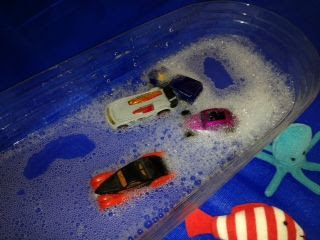
5. Wash Day!: Kids love water and kids love bubbles - and you love clean toys! Make everyone happy with wash day activities. Set up a basin with some warm, slightly soapy water - a little squirt of dish detergent goes a long way! Have a rinsing station - either a clear water basin to dunk in or some pitchers and a larger shallow container (like a baby pool) and a drying center. If you have access to a fence and clips, that would work, or spread out some beach towels or an old shower curtain to catch the sun. Then, let your kids have fun washing, soaping, rinsing and drying - cars, dolls, play equipment, etc. They will have a great time - of course, bubbles may be blown around, too, and they will most definitely get wet - and happy! 

Have fun!

Thursday, July 7, 2011

Summer Camp: Pretend Camping!

When the summer starts to get "old" for your kids, here's a do-it-yourself fun idea: hold your own summer camp days, right at home!

All you need is a little pre-planning and some imagination - start now, while the fun is still fresh and plan ahead for later in the summer!

In the past, I've held camp during August (basically crafts, games, stories and snacks!) - parents and children were looking for things to do by that time of the summer! Plan a morning full of activities - you could even switch off with another parent or two to free up some me-time!! It's always more fun with a few:)

I'll start you off  with ideas for a theme that worked well for me - and follow up with more themes in more posts - so, check back!

Camp-In Day

Set up a small tent outdoors (or indoors!) and gather up some quilts and cushions. Make sure you have the fixings for a pretend camp-fire - I found a little aluminum baking pan that we adorned with yellow, orange and red tissue paper flames - some rocks or wooden blocks placed in a circle with some sticks in the middle would do nicely, too!


Meet around the "campfire" to get started - talk about camping and outdoor fun - then go on a little "hike" through your yard, neighborhood or a near-by park. Have a small plastic container along for a sensory tub to be filled with rocks, pinecones, leaves, small sticks, etc.

When you are finished, have a basket of books related to camping available :)  There is a Berenstain Bears book - "Go To Camp" and a great Kevin Henkes story "Bailey Goes Camping" to get you started! While some are checking out books, have the other children rotate through different activities, just like in school, so each child gets to try everything!

For crafts, have available some TP rolls to make into binoculars for viewing nature. Use paint or markers to color or have stickers available to decorate. At another spot, have some sturdy paper and glue to turn your nature finds into a cool art collage! Get a little letter/sound practice in by trying to label the found items! For pretend play, gather some plastic plates and picnic items and they will do the rest!

For a snack, try some trail mix (cereal mixed with raisins and nuts, if permitted) OR assemble your own kid-s'mores, using graham crackers with layers of chocolate cake frosting and marshmallow cream spread on top! Have water or juice available to stay hydrated!

Knowing how kids love "souvenirs," you could also find some tiny compasses and bandannas at a party store or on-line catalog! When you're ready, you can close the "camp" by singing some favorite songs around the fire! Have fun!

Tuesday, June 14, 2011

Under the Sea Handprints


Love, love, LOVE this end-of-the-year project! This is a close-up of a t-shirt that has a lot of person-ality in its design! My friend, Mary Ann, and her wonderful helpers, Tammy and Jean, were looking for a fun end-of-year keepsake, so this is what they did in their preschool class. Each little person in the class made a special handprint with paint on each little shirt. Then, with a little imagination and some fabric paint, they were all  transformed (Tammy's the artist-in-residence!) into a variety of sea creatures - one shirt for each child :).  I see a snail, a stingray, a jellyfish ... as well as some beautiful, colorful fish and seaweed!

This concept would transfer well to a cloth bag for a sweet gift, or even to paper for a fun craft project. Use it as part of an Under the Sea unit or for a party craft - have fun with it! Ask your children to interpret what they see in different handprints or shapes and add some touches to make them unforgettable!


There are so many great books to use for an Under the Sea unit! One of my favorite authors - Marcus Pfister - has a series of "Rainbow Fish" books that are fabulous for their lessons - themes of friendship, sharing, inclusion - and for their beautiful artwork! These are anytime books, but especially fun to read as it get closer to summer - have fun!

Wednesday, June 1, 2011

More Ocean Animals!

Getting in the swim of an ocean animals unit? Don't forget to include non-fiction books in your reading stack! There are many books with terrific pictures available at your library or bookstore. Don't let the volume of text get in the way of using books for reference - you may just share a picture or two to add some context to a story you are reading!

I have a Scholastic book that even the younger children love to pore over - "Seashore" by Sue Unstead. They are inspired to handle the book by the real sand in a pocket on the cover, but a lot of the vocabulary is unfamiliar ... so we read some sections, a little bit at a time and take picture walks through the rest. As you revisit a book like this, you may read more and more, as your child's interest and attention grows!

When it's time for a craft, make a jellyfish! Here's a simple one for younger children, similar to the crab in a previous post. Here's what you need:

One small paper plate
tissue paper
googly eyes

Fold paper plate in half and color to match the tissue paper - cut mini-streamers for tentacles and add eyes. Add something to hang it, like a length of yarn or a chenille stick - and you're done!


Another jellyfish that the children love to make incorporates a squishy center for tactile fun! I used hair gel, but warned about possible leaks, letting the "goo" out! If you have an idea for a filling, let me know! You'll need:

Purple construction paper
Sandwich-size ziploc bag
A squirt of hair gel (or another gelatinous substance)
Glitter
Tissue paper (light purple would be great!)

Fold a piece of construction paper in half and trace or have children cut a half-circle shape through both. Cut a second, smaller half-circle, as shown in the photo. Take your sandwich bag and add a squirt of hair gel (I found some purple, inexpensive gel) and glitter. Seal the bag. Center this in the smaller half-circle and attach, using staples and/or glue to try and contain the gel in that "window." Add tissue paper tentacles and secure between layers of construction paper.

Let your children feel the squishiness and talk about the flourescence that the glitter represents. There are jellyfish that are luminescent - look it up in one of your non-fiction books! Have fun!

Tuesday, May 31, 2011

Ocean Animals

Ocean animals are sure to catch your children's imaginations! There are so many different animals - crabs, jellyfish, sharks, just to name a few - and they are all fun to read about and fun to do projects with! Gather some books, plan some crafts and have some fun!


Here are a few of the summer books I have in my reading bin right now:

"Clam-I Am! All About The Beach" by Tish Rabe (a Cat in the Hat book)
"Curious George Goes to the Beach" by Margaret and H.A. Rey
"Commotion in the Ocean" by Giles Andreae
"Beach Day!" by Patricia Larkin
"George's Store at the Shore" by Francine Bassede
"There Was An Old Lady Who Swallowed A Shell!" by Lucille Colandro

I have LOTS more, and you will find many on your own - choose books with fun language and active words, as the kids are getting "summer fever" and want to move more these days!

When you read a book the first time with your children (always read through by yourself first, if possible), take your time and make the most of interesting words and rhymes, etc. Before you read, tell your children that you want to read it all the way through, and then allow time after to revisit each page to ask questions or notice things in the pictures. Reading should be an interactive experience, but doesn't have to take away from the rhythm and rhyme of the story! Picture books always invite many questions that NEED answers, but, by doing it this way, you still have the pleasure of reading the book as the author wrote it :) AND still having all questions and observations be a part of the experience.

With younger children, or as needed, this process can be flipped. Take a visit through each page before reading the book, making observations and answering questions, then read through for enjoyment. Your experience with your child will steer you to the most effective way to enjoy each book!

Then, each time you reread the book, you will find new things to experience - children remembering words, repeating phrases, rhymes - enjoy the book over and over to stretch your literacy lessons.


When you are ready to make a craft, a simple CRAB will be fun to assemble! All you need is a small paper plate, some red construction paper, two googly eyes and a chenille stick or some yarn. Make a template using the pictures here to make claws and arms - you will need two of each per child.

Fold over your paper plate and color red, if you wish (or maybe they want to make blue-claws!) Attach all pieces as shown and glue on two eyes. Punch a hole at the top to hang or play with just as-is - have fun!

Friday, May 13, 2011

Build a Sand Castle!: Early Childhood Project

When the summer starts to get closer, thoughts turn to the beach, the waves – and the SAND! While you’re waiting for beach weather, build your own sand castle! You’ll need some cardboard tubes from paper products, some glue, a small sturdy paper or plastic plate and a few handfuls of sand.
First, prepare the cardboard tubes by notching out the tops to look like turrets. Older children can help with this task, cutting out in a pattern, but younger ones may need this step done for them.
Next, have the children paint the tubes with white glue, just until they are lightly coated. While wet, roll in a shallow tub of sand until the tubes are covered and let dry.
Glue three or four tubes together to form a castle, using varying heights if desired. Then, pour some glue on the plate, and set the castle on it, and add more sand.  This will give you a base for your castle.
You can decorate the castle by adding some play-doh rocks or a blue paper moat. When you’re done, design a flag for your sandcastle, using paper, foam, stickers, etc. and add it using glue and a toothpick or stick.
Have fun with it while you dream about making the real thing soon!

Monday, May 9, 2011

Bug Party: Early Childhood Exploration!

Plan a "party" to celebrate and explore BUGS! Gather a few things together to make your children feel like explorers - we chose safari hats and bandannas from the party store, a simple bug collecting case (ours was from a craft store, but you could make one from a recyclable container) and a magnifying glass. Then, round up your bug-hunting crew (we did it for a small birthday party!) and get ready for an adventure. Plan on visiting a nearby park or garden, and plan your route with a rough map - map-makers welcome! (On our walk with a few three and four-year-olds, we decided to make a work-crew guidance device (!) using a length of rope and making a big knot for each child to hold onto - the leader held one end of the rope and a spotter took up the rear! We told them we all had to help carry the rope in case we needed it!)

Once you arrive at your destination, have an adult or child model for the other children how to move  rocks without hurting bugs, how to slow down and look carefully, and how to stay very still while "hunting" - then, set off on your own or in pairs, once a perimeter has been established! Cries of "check this out!" and "quick, look at this!" will ensue as everyone has fun finding a variety of insects.

Make sure to have a digital camera on hand to record some of your finds for review later! Have some books about bugs along to read or another activity for when you start to slow down ... we sat down and did some body art, coloring ants and ladybugs on forearms or cheeks with face-painting crayons.

Later, prepare some special treats with your "buggy" crowd:

Ants on a Log
Use sections of celery sticks, spread on cream cheese and add a row of raisins for ants. I've also seen this done with variations using pretzel logs, peanut butter and craisins :) Watch your food allergies!

Dirt Dessert
Mix together one large vanilla pudding mix and two cups of milk. Add 1/2 cup of powdered sugar and 8 oz. of softened cream cheese - mix until blended. Stir in 8 oz. of Cool-Whip type topping. If you do this with the kids, make sure to count and measure along the way - math!

In another bowl, combine 1 1/2 lb. package of crushed Oreo cookie crumbs and 1/2 stick of melted butter to look like dirt. Alternate layers in a cups or a bowl, ending with crumbs on top! Add some gummy worms for fun and refrigerate!

Yum!

Saturday, May 7, 2011

In the Kiddie Pool for Early Learning Fun!

An inflatable baby pool is a great tool to have on hand – I like to keep a small one around for all sorts of fun- no water necessary! A 3-ft diameter size is great for a small play center, while larger is better for a library or group “sit-in” set-up!


Swim into Reading
Fill your inflated pool with some comfy cushions – I’ve thrown in a few beach towels, too, that they can roll up or spread out. Add a stack, or a beach bag, of books, such as ocean and/or fish books!  Plan with your children how many can comfortably fit in and generate rules for use.  Chances are you’ll find lots of reading going on!

Sandy Beach
This is a great way to have some sand play, even if you don’t want or don’t have a whole sandbox set up! Fill partially with some sand – you don’t need a lot! – add some shovels and maybe some shells or plastic sand toys. Watch out for sharp edges that could puncture the pool or hurt a child. You can make it a “reach in to play” center or a “get in to play” center, depending on the size of the pool and your clean-up requirements .
Imagination Play Prop
Children are resourceful in planning out how to use props for imaginary play. A small pool might be an animal pen, a baby crib, a comfy bed, even – a pool! I’ve seen one used as a stage, a lake, a fish pond – even a Jacuzzi!
Fishing Hole
Make some fishing rods from sticks you find outdoors or from some dowels (easy to find at a hardware store). Attach a length of heavy string or yarn and add a magnet to the end.  Whatever you are fishing for should have a paper clip, or something metal attached to it, to make it “catchable”! You can catch fish, octopi, and whales made out of craft foam - great hand-eye coordination practice!
Fish for Learning
Take your fishing to another level and make letter cards, number cards, matching cards – and plan games around them! If you already have cards with magnets on them, just change the fishing pole, so it has a big metal clip – it works either way! Practice letter and number recognition, do simple addition when you catch two cards – the options are endless! Colors, shapes, sight words, beginning sounds … "Look, what letter did you catch? Hmmm, what sound does that make?..." or "Find and catch a yellow fish! Now catch a red fish!"
Games
Practice throwing/tossing into the pool to get some exercise and hone throwing skills – bean bags, beach balls or other small balls would be fun to try! Try from different distances with different things, see how things fall depending on their weight and distance – have your children guess and then experiment!
Have fun!