Showing posts with label nature. Show all posts

Saturday, March 11, 2023

Printmaking with Nature

 As the weather warms up here, everyone wants to be outdoors, especially the kiddos. Looking for lessons that can be done outdoors is one way to satisfy that longing for fresh air! 

Printing with the colors of spring is a delicate process but has so many benefits for your littles. Teach them to retrieve the flower parts that have fallen already, or those that are in abundance or wilting, so as not to take away what animals and insects need :) Talk about food chains in the simplest terms and about how important all of the pieces of the chain are. 

It is also a great time to talk about having respect for growing things, and to give the plants a chance to survive and thrive. Children are capable of being very gentle and should understand their impact on gardens and wildflowers - respect for all nature! :) 


Bring paper and rolling or pounding tools (maybe from playdoh or kitchen sets) outside.  Demonstrate how to place the plant material gently between the folds of the paper and press, or pound, the color onto the paper - and then check out what you have made! The color and shape may transfer or become another shade when pressed on the paper. Very wet flowers and leaves won’t work for you, and dried leaves or plants are too brittle to transfer well. 
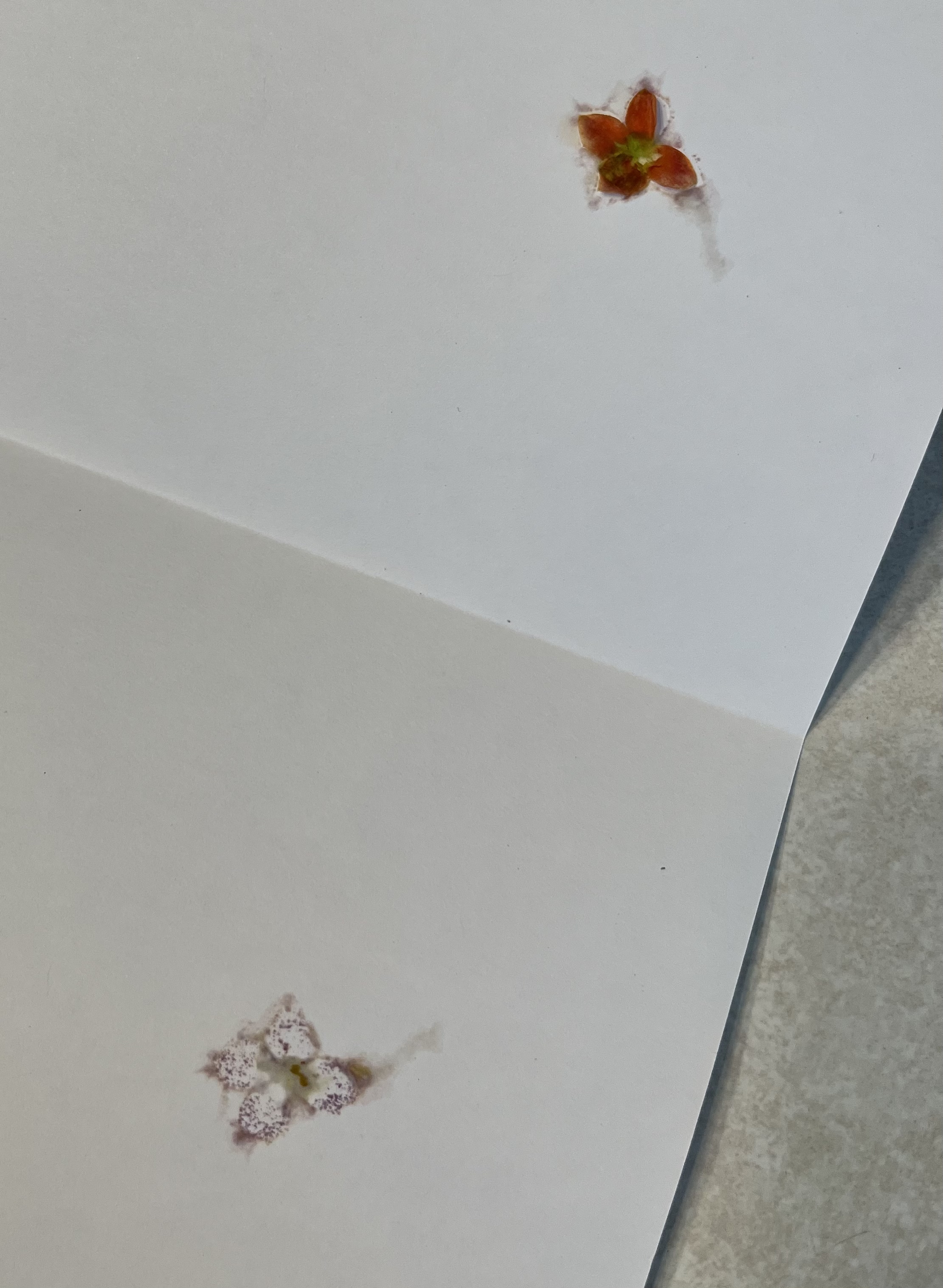

Trial and error (or success!) is a great practice for children, as they need to learn stamina in experimenting. Watch for students who are willing to share information and partner them with those who may need some encouragement. 

This can be a great team building experience, as you hopefully see empathy and excitement build for all the group to be successful. As children learn to work together, they can experience great self-image and feel good about cooperating. Encouraging these traits through play and creating is THE BEST! 

And, as always, have fun!


Sunday, January 24, 2021

Discovery Walks in Winter

Sometimes you just need to get outside, even if it’s chilly and wintery out there! A quick walk or a bundled-up garden or playground visit will clear the head and get some movement into your day :) While you’re walking, shivering, or playing, make some observations!

Just like a “noticing” walk in Springtime*, take the experience to a new level by generating new vocabulary and slowing down to really see what’s outside. You might find some deserted (or not!) habitats for small animals. The undersides of fallen tree branches or beneath small piles of leaves are likely places for hidden wildlife such as insects. You might see some frozen icy spots, with cool cracking to snap a quick photo of. There are wonderful sights to see, when you slow down a little and really notice :)

Closely examine the pieces of nature that your little ones find ... It’s treasure to them! Look for pine cones, big and small, collect different types of needles from evergreen trees, or snatches of bark that you might find on your travels. Even a twig or a fallen feather will be a source of wonder for a child.

Take the “treasures” indoors and use in drawing and writing projects for little ones or older students. Children may want to use a magnifying glass to really look closely at their chosen objects, like the scientists that they are. Sketching and labeling are good first activities to get started for the younger ones. 

Older children may generate a list of words for writing. Begin with a shared writing chart to build vocabulary first. Students may help with beginning sounds and more, depending on their abilities. Try doodling a little picture next to each word, or hanging an actual sample in a clear bag right on the chart.    

Use this as an anchor chart for writing and labeling, and moving on to full sentences, where appropriate. No matter where your students are developmentally, you can bring some of that winter nature right into the classroom! It’s a great way to level the playing field with shared experiences :) 

Have fun!


*link to Mindful Noticing in Springtime post below

https://makeearlylearningfun.blogspot.com/2017/04/mindful-noticing-in-springtime.html


Friday, October 16, 2020

We are Scientists: Pumpkin Exploration

There is nothing like hands-on experience for really learning and remembering about a topic. Pumpkins are a great subject for diving into and learning about in a multi-disciplinary way! 

Measuring is a fun way to start out .... try it with non-standard units of measure that you can compare to other objects. You can use something flexible like a rope or length of yarn to see how much it takes to go all the way around the pumpkin. You can also see how tall the pumpkin is this way, or use blocks or connecting cubes to get your answer. Hands on measuring and comparing are great math activities :) 

Talk about how your pumpkin grew and where it came from. Show photos of the stages of growth - from a seed to a sprout and changing colors - there are great non- fiction (and fiction) books that highlight this. You can find videos of pumpkins growing and even virtual pumpkin patch visits! 

Cut into your pumpkin for some slimy, hands-on fun next! I like to make a cut in the top and also cut out a “window” in the side, to make it easier to see in and reach in - the hole on the top offers more light.   


Lots of kiddos love to reach in and pull out all the pulp and seeds. Use as many of your five senses as possible - to see, smell, touch and maybe even taste seeds or pumpkin products. Run a hand around the outside and count up the ribs - or try guessing and counting as a fun predictive activity. For those with sensory differences, try for a little exposure at a time to the pulp in order to get them more comfortable with the squishy feeling. 


In-class learners can go back again and again to see and explore ...  remote learners may benefit from leaving a basket of baggies with pulp and seeds outside for them to pick up after school hours. Planning ahead can have all students on the same page with this activity. (If you’re up for it, watching it rot over a few days is also interesting.) 

Playing with sealed bags of “pumpkin guts” can be a fun counting activity - make sure there is pulp and seeds and have students mush around and count the numbers of seeds inside. 

Using a variety of gourds and small and large pumpkins can also be a fun sink or float activity. Introduce some other classroom items - maybe a pumpkin eraser, or some plastic scoops - and guess whether things will sink or float. Then, take turns testing out your theories. Your little scientists will love it! 

Have fun!