Showing posts with label Equity. Show all posts

Sunday, August 4, 2024

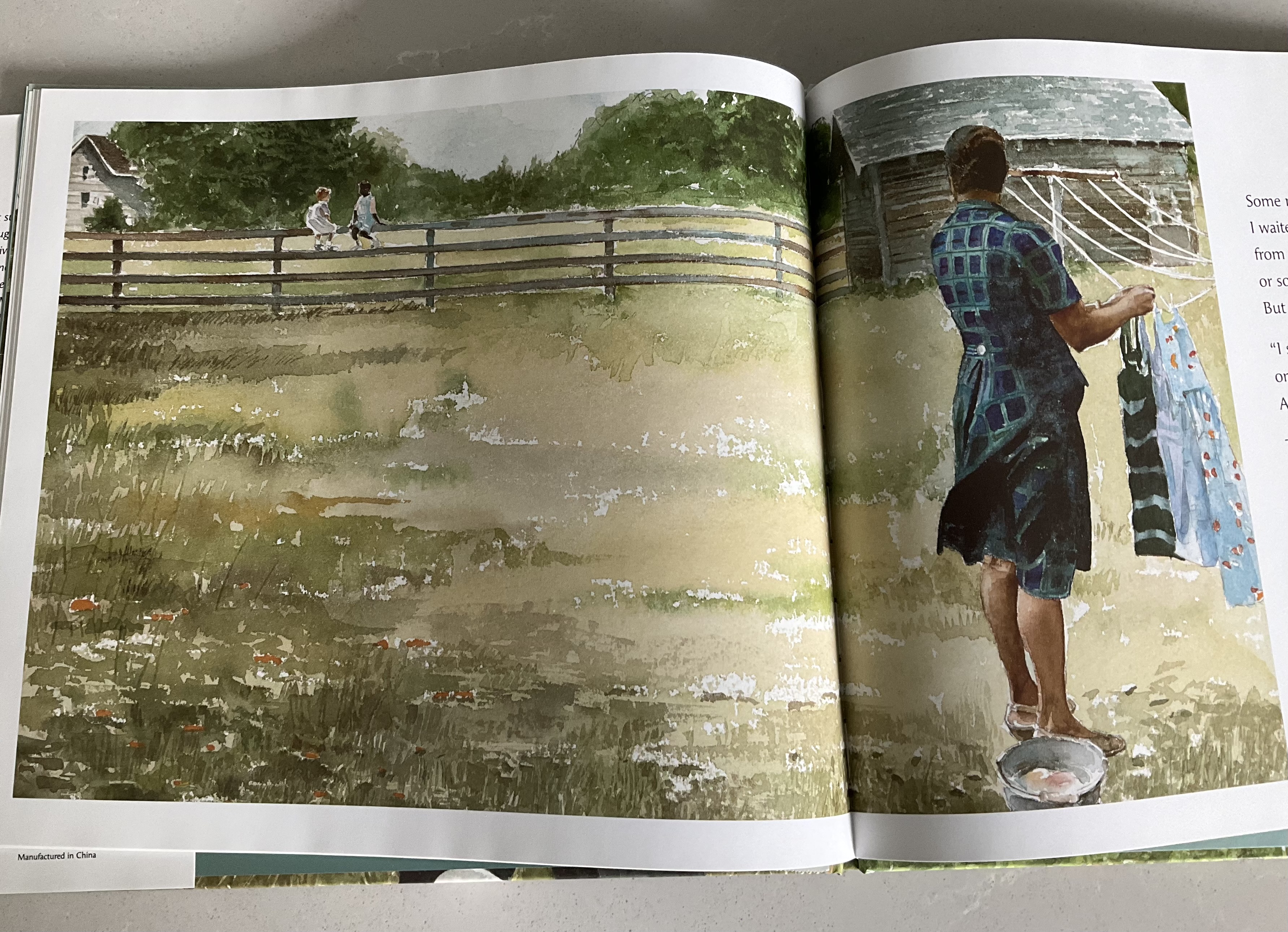
Book Choice: The Other Side by Jacqueline Woodson, illustrated by E.B. Lewis


Once in a while, you come across a book so perfect, so beautiful and important in story and matched wonderfully with its storytelling artwork, that you pick it up again and again, even as an adult. 


Jacqueline Woodson has written several books that my readers and I LOVE, but something about this one makes my kiddos open up a reflective dialogue every time it gets read. It shows curiosity on both sides about a possible friend, but also the real (or artificial) barriers put in place to keep them apart. Yet, it unfolds so gently, it often leads them to wonder, “Why can’t they be friends?” 


Clover and Annie bridge this divide by letting their friendly natures overcome the barriers, and find a way to be together and get to know each other. Once they do, they explore the ways they are similar, rather than the ways they are different, leading to new knowledge and friendship. 

I love the way this plays out, and Woodson’s word choice and descriptions are on point. Children as young as Kindergarten have warmed to this book and its message, and asked important questions during and after this read.


The illustrations add to the perspectives in the book, and, when simply doing a picture walk through this book, you can see the story unfold. The message is deep and the seeds of hope it sows are so important to share with our upcoming generations.

Note: This is not a new book - it was first published 23 years ago. Hope is a living thing - hopefully, it has grown since then and will continue to keep growing ... 

Have fun reading :)

Tuesday, September 22, 2020

Book Choice: Expanding Equity

There are so many great, diverse books for children that can be introduced into your home or classroom library, enhancing your selection, making it more multi-cultural and more equitable. By showing characters of all races, creeds, and family and home situations, you are including all in your home or classroom, and making sure that your children are seeing that the world is full of wonderful diversity. Showing characters with physical challenges, or including characters who might have unseen differences, opens up great conversations and normalizes varied situations.

A short list of favorites doesn't even begin to touch on some fabulous new and old titles. Use this as a jumping off point, but keep adding to your own list - it's so important! 


Some books to look for ....
 

The Day You Begin by Jacqueline Woodson (2018)

This book doesn’t leave you at how people are different but rather reminds us that when we reach out and take the first steps, people meet us half way.


This Is How We Do It by Matt Lamothe (2017)  

One day in the lives of seven kids from Iran, Russia, Peru, India, Japan, Uganda, and Italy. Highlights differences and sameness about their schools, homes, dress, food, play, etc.


La Princesa and the Pea by Susan Middleton Elya (2017) 

This is a great retelling of the familiar fairy tale, with up to date illustrations by Juana Martinez-Neal. Check out the glossary of Spanish terms up front before reading.  So great for native Spanish speakers to celebrate their native tongue. Look for other books of this type - familiar stories with different languages and cultures featured.


Jabari Jumps by Gaia Cornwall (2017)  

This beautiful, simple book is very relatable for all children – the main character is working up courage to jump off the diving board.  Looking for books that show characters of all colors helps students see themselves in books.


The Bad Seed by Jory John (2017)  

The cool, graphic illustrations show the Bad Seed (the "bad" kid) and how it got to be bad … you will start to feel sorry for the bad one and root for it to go good.  Shows a kid version of trauma, and trying to find good in what can sometimes be a tough world … the right book for a certain situation.  Great for helping students develop empathy.  


The Diwali Gift  by Shweta Chopra and Shuchi Mehta (2015) 

The characters get a gift from one’s grandmother, Dadima, to celebrate the Hindu Festival of Lights, Diwali. Explains some traditions of a Diwali celebration – may help some students make connections to their holiday, which may not be a holiday all know about. Definitely read the glossary in the back for definitions first. 


All Are Welcome by Alexandra Penfold and Suzanne Kaufman (2018)  

This story is told in its pictures and has to be looked at closer than just the words on the page. Pictures depict children of all races, religions, etc. working and playing together in a school environment. 


Whoever You Are by Mem Fox (1997) 

This is a sweet, classic book which celebrates the similarities among people, instead of differences. 


The Sneetches by Dr. Seuss (1961) 

This book has an important message for any/all marginalized groups. 


The Family Book by Todd Parr (2003)  

All kinds of family groups are shown in this inclusive book. This books shows us that no matter what size or shape your family is, it is a great family for you. 


The Paperbag Princess by Robert Munsch (1992)  

The Princess saves the prince and then figures out she’s better alone - flips the gender stereotype.


Do this important work to celebrate diversity! 


And, as always, have fun doing it!

Friday, September 4, 2020

Exploring with Ezra Jack Keats

Ezra Jack Keats was a groundbreaking author/illustrator who left us a gorgeous collection of storybooks, with characters drawn from minority groups and what he called "outsiders.” When The Snowy Day (one of the first books that Keats authored) was published back in 1962, it broke the color barrier for depictions of characters in children's books. 

Keats had grown up poor during the Great Depression in a Jewish neighborhood of New York City, and said he knew what it felt like to feel "outside the group." Although he was white, he decided early on to make many of his characters reflect the varied groups of people that he saw every day, who were not seen in the books he read. His use of urban settings and characters representing all races, set him apart as an author and illustrator and won him awards, such as the Caldecott Medal, for his work.

As a teacher, I can recall reading The Snowy Day to a class, including children of color, and having children get excited about seeing "themselves" in the story book. It was a wake-up call for me to curate my classroom collection so that this wasn't an unusual occurrence, but rather one of many books depicting characters from all races, creeds, living and family situations, etc. As Ezra Jack Keats believed, "all children should be able to see themselves in a book they love."


Keats went on to write and illustrate many, many books. Some of his characters were featured in several books, such as Peter, first seen in The Snowy Day. Peter was featured in 5 or 6 books, and grew up to be an older child in Pet Show. Students get very excited when they make this connection!


Keats' style of illustration was also so engaging and is completely captivating all these years later! He used all different methods, incorporating some collage, gouache, pen and ink, etc. in order to keep his art interesting. Kids find his colorful work fun to look at!


There are so many Keats stories that you can build an extension activity from ... 

The Snowy Day - use a shaving cream/glue solution to layer on “snow“ and use urban building silhouettes to complete a landscape and then write about it.

Peter's Chair - remember a "special something" that was handed down in your family and draw it, cut it out and embed it in a picture with more collage elements.

Whistle for Willie - imagine hiding in a box or learning a new skill and who you would surprise with it ... now draw it or write about it!

You can use any book to try collage, embedding some newspaper scraps and even fabric in a picture and writing about a character or scene from the story.

For more information about Ezra Jack Keats, click below:

https://www.ezra-jack-keats.org/

Have fun!


Saturday, February 15, 2020

Small Steps Towards Equity and Inclusion

Teachers (and parents) can broaden children’s experiences through thoughtful, inclusive choices in both literature and in choosing topics for project-based learning. Seeing a range of people reflected in books, and opening up topics that are inclusive, where everyone can contribute and feel connected, are just two ways to honor and celebrate the differences among us.

All children need and deserve to see themselves in books - to feel a part of the world represented in literature, through illustrations and photos. If they do not, they won’t necessarily feel the connection to literature as a whole and to specific stories that may reflect or expand their experience of the world. Children should also be looking at illustrations and reading stories that broaden their view of different cultures ... there is a wealth of great books out there to choose from.


It’s easy to find book lists that are inclusive and expansive, depicting children of all races, cultures, ethnicities, etc. Books that also show characters with disabilities, varied family structures, and in different living situations are so important, as they normalize things for children who may feel marginalized in some way.

In order to feel truly a part of play and learning situations, children must also be able to make connections to the materials featured in the classroom. Choosing topics for group activities that level the playing field opens the door for children with differing backgrounds and experiences to meet on common ground. Topics that are drawn from nature, for example, allow all children ... those who are learning a new language, those with special needs, those with fewer background experiences, even those with trauma in their past ... to join in and contribute.

Common subjects like leaves, snow, planting, motion ... the typical “science” explorations have shown to be great equalizers in our class. Using these types of topics to launch new vocabulary, build knowledge, and explore common questions, helps our students all get involved in the topics we explore. Using these projects to bring together all of our children has helped make our classroom a community, and give each child a voice. And, it has been a very happy voice!

Have fun - and promote equity!