Showing posts with label building. Show all posts

Friday, October 30, 2020

Block Challenge!

Blocks are a great creative tool for open-ended play. 

Kiddos will spend time making castles, houses, roads, furniture...all kinds of things! They try out things like balance and structure, learning and adapting through their own mistakes, developing perseverance and design skills along the way :) 
 Another way to use blocks is to set them up as a solo (or paired) activity to copy a design. Students will use analytical and visual skills in order to choose the blocks that are pictured, and put them together to make a copy of a particular structure.                                                            
Your kiddos will have to accomplish a multi-layered task to do this. It takes analysis, planning, and fine motor skills to accomplish. There are many skills involved - not just how to assemble them and balance them correctly. It also takes focus and patience to recreate even the simplest of these structures.
 

First, make structures - some easy, some harder - and photograph them. Print them out in a large photo format and encase them in a plastic sheet, or share this as an activity on an iPad or other tech. 

Leave a basket of blocks, including the ones they will need and others, nearby and let the building begin! 

Have fun!


Sunday, October 11, 2020

Social Distancing with Small World Play

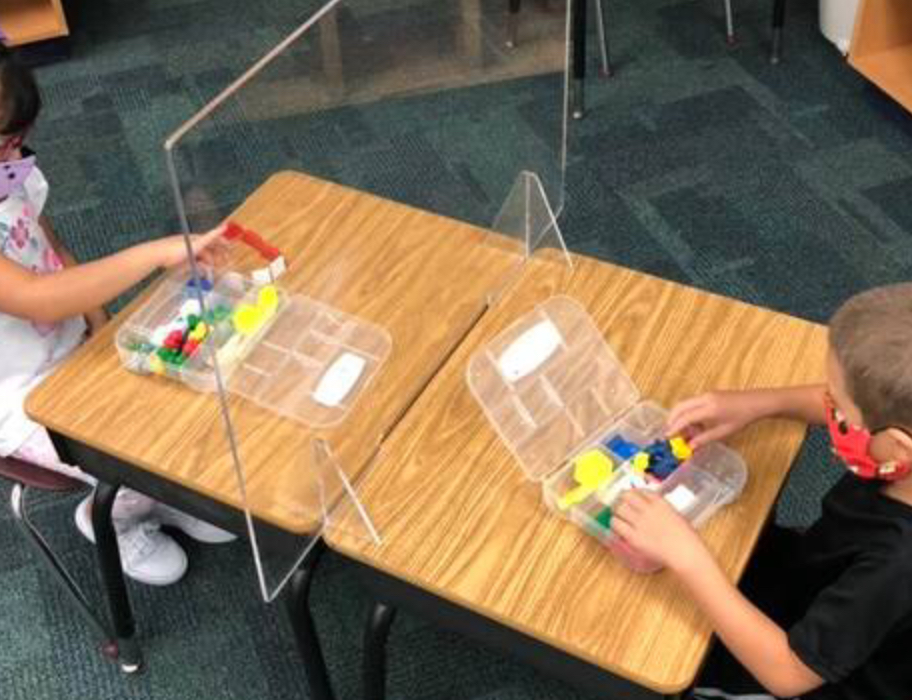
Looking for ways to incorporate interactive play in these days of separation and caution? Playing in pairs can still work with some social distancing hacks :) Use plexiglass or other sturdy see-through materials to set up stations to do paired small-world play! 

Kiddos LOVE to build with all sorts of materials and to make “worlds” where small figures or animals can play. Offer interesting materials, like chucks of wood, twigs, shells, small rocks, glass florist stones, etc. and watch as they construct interesting landscapes. Keeping small tubs to house natural elements spurs children to gather and bring in interesting pieces to add to the bins. Using the plexiglass to separate but bump up against each others’ “worlds” will help build excitement, seeing what their partners are adding and constructing with. Conversations and interactions can still occur, with proper social distancing :) 


Don’t feel trapped by tables either! Use your sneeze guard materials on the floor, with some “tummy time” play, using the same ideas. You will be amazed at how focused some friends will be and able to stay within your social distancing guidelines :) No plexiglass? No problem .... Take those old chart stands, or make a stand from some PVC pipes, and securely drape some sheer shower curtains to divide some space. 


One group I had a few years ago “designed” a Winter Olympics setup - I could see something like this applied to a partitioned play area, geared to individual-but-together play. Little friends like to just construct landscapes with no particular end, so let them create :) 


Play is definitely tricky these days, but try ....

And, have fun!

Wednesday, July 18, 2018

Intentional Exploration: Step Away!

As children move from parallel play to mingling with others, so many changes take place. Child-directed play is so cool to watch, as the children work out roles, compromises, and plans ... and the language development, social skills, and organizational skills begin to show.

Step back and allow the children to develop ideas, formulate questions, and look for answers. It is hard for adults to let go, but so necessary :) You might help launch a project by supplying materials or by "recording" a plan that will help to organize a small group - but it's important to help and then step back out of the action, to watch and support only when needed.

Let the play be child-driven or child-directed, instead of just child-centered :) The adult role should be less of a teacher and more of a facilitator. In everyday play, this may look like observing a play situation and stepping in to encourage compromise or to help players find the right words to ask for what they need or want. Water play took on a new direction here when students wanted to make the balls move by blowing through straws.

In a larger play scenario, as in a whole class study or investigation on a broad theme, a question may come up that spurs investigation on the part of the children, and they may need guidance and organizational help. As they generate questions, an adult may take on the role of recorder, writing down questions and terms that need explaining, in order to build a web or list of "what we want to know."

The best, most interesting way for children to learn, is to dig in and really find answers for themselves. Touching, creating, experimenting ... little scientists can direct their own learning, with support. By working in the background to make sure that materials are available and time is set aside, teachers or parents can aid in setting the stage for great learning!


In the block play area pictured here, some children are making letters from blocks, some are fitting them together like a puzzle, and some are trying to create a balanced wall. Lots of different ideas being tested and played out.


There is nothing like watching one of those "lightbulb moments" occur, when a child gets something and is so excited to share about it!

As always, have fun!