Showing posts with label social skills. Show all posts

Sunday, August 4, 2024

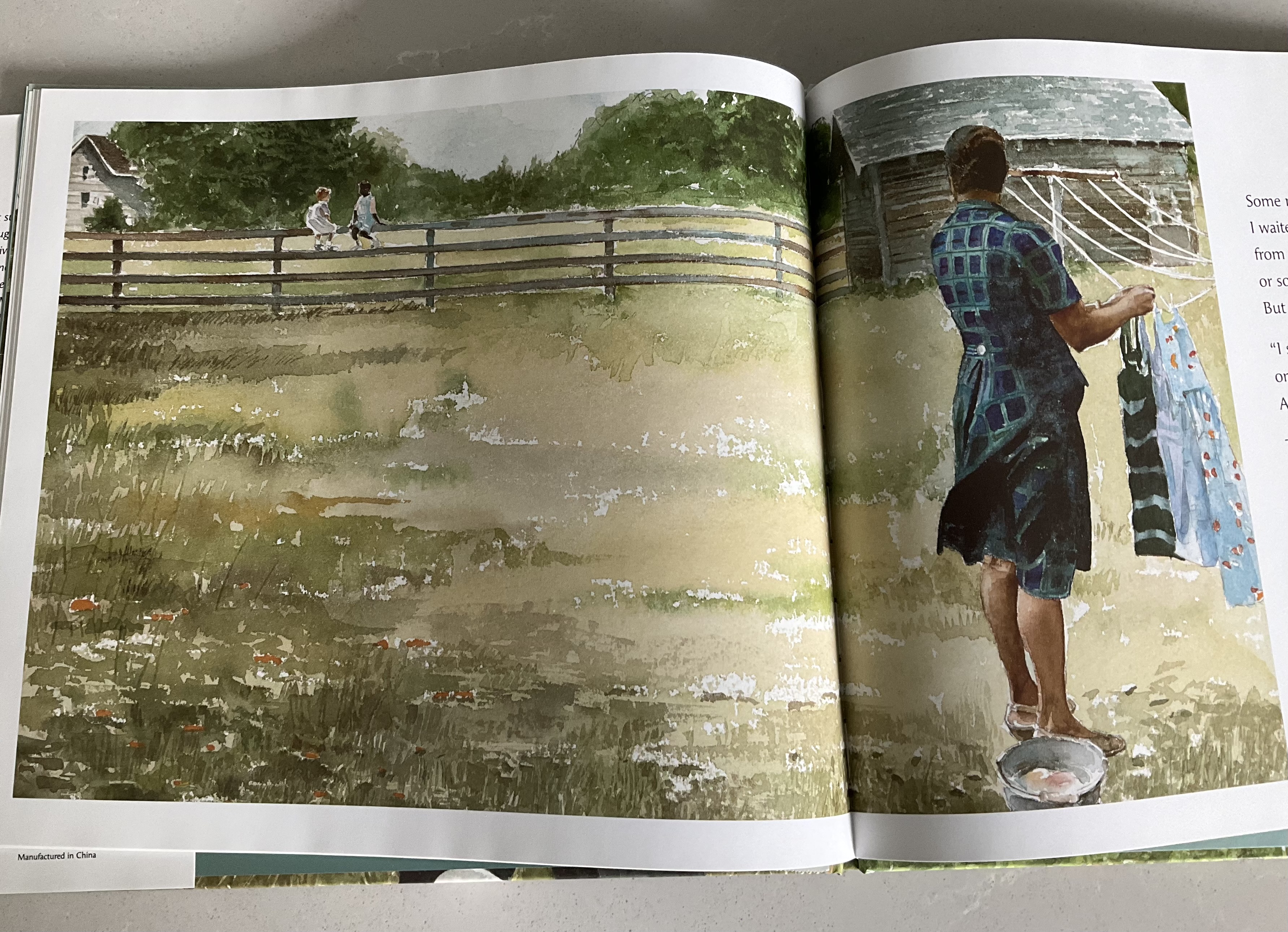
Book Choice: The Other Side by Jacqueline Woodson, illustrated by E.B. Lewis


Once in a while, you come across a book so perfect, so beautiful and important in story and matched wonderfully with its storytelling artwork, that you pick it up again and again, even as an adult. 


Jacqueline Woodson has written several books that my readers and I LOVE, but something about this one makes my kiddos open up a reflective dialogue every time it gets read. It shows curiosity on both sides about a possible friend, but also the real (or artificial) barriers put in place to keep them apart. Yet, it unfolds so gently, it often leads them to wonder, “Why can’t they be friends?” 


Clover and Annie bridge this divide by letting their friendly natures overcome the barriers, and find a way to be together and get to know each other. Once they do, they explore the ways they are similar, rather than the ways they are different, leading to new knowledge and friendship. 

I love the way this plays out, and Woodson’s word choice and descriptions are on point. Children as young as Kindergarten have warmed to this book and its message, and asked important questions during and after this read.


The illustrations add to the perspectives in the book, and, when simply doing a picture walk through this book, you can see the story unfold. The message is deep and the seeds of hope it sows are so important to share with our upcoming generations.

Note: This is not a new book - it was first published 23 years ago. Hope is a living thing - hopefully, it has grown since then and will continue to keep growing ... 

Have fun reading :)

Tuesday, February 9, 2021

“Socializing” for Hybrid/Remote Learners

As the days stretch on in this age of COVID schooling, children are seeking social contact with others - friends, classmates, even family members. Some may be sad and quiet, some may be acting out - many are having trouble focusing on lessons when they are hungry to just chat and be a part of a social group. 

It’s also more complicated when some are in-person and some remote, or all remote ... and all “socially distant.” This lack of contact is becoming even more pronounced with the colder weather. 

In the interest of meeting the social needs of your kiddos AND getting those students on track for success, some time needs to be carved out for some simple, creative solutions. 

Try these ideas: 

Classroom Pen Pals: 

Since finding time is always a factor, incorporate some socializing into your writing time. Have students do pen pal activities, but do it within your class, to let them “mingle” without moving around :)  Pair remote students with in-person friends to improve spirits and make connections. Any age students will benefit from this - whether they are sending written letters, pictures or cards. Each week, pick names from a hat to rotate who is “pals” with who! 

Show and Tell: 

Each day, make it a part of your meeting time to give students a turn to talk about something personal they’ve been desperate to talk about. You can choose a theme, such as family or season, or even tie it to a science or reading lesson. A favorite book, artwork, or a family photo would work, too. Try an author’s chair - virtual or in-person - regular chances to interact with friends and express themselves will do wonders for morale :) 

Class Yearbook: 

Have students work on writing about themselves and doing self-portraits to compile a “directory” and provide one to each student. Establishing connections and finding out more about each other can only help with any isolation that students may be feeling. 

Good luck! And .... Have fun!

Thursday, October 29, 2020

Playing Restaurant: Social Skills and Language Building

There is no better vehicle for developing language and social skills than an authentic play experience. Children love to act out familiar scenes, take on roles that are interesting to them, and interact in pretend play scenarios. Playing “restaurant” or “diner” or even just at-home eating can be a great time to practice those skills with little or no adult intervention. For those with little or no dining-out experience, this is also a way to gain knowledge of an unknown situation. 

You don’t need a lot to get started :) A simple play set is great, but you can also work with cast-off kitchen pieces and recycled containers - your kiddos will take over whatever you make available. Just make sure they’re clean and unbreakable, for safety reasons. 

If you have access to a pretend play kitchen area, your students can work with that, but a simple disposable plastic tub, turned over with Sharpie details was embraced by our friends as a cooktop :) 

This post - Make Your Own Toys!  - is all about making your own set from things you have at home :) Kiddos will work with whatever they find ... and a healthy dose of imagination! 


For “dining out,” don’t forget an order pad for students to role play and take down all their customers’ food orders!  Small friends may draw or make little marks, while older kiddos will get excited to try out their spelling tricks! 

Making a menu board or some menus might be another fun writing exercise. Invented spelling and drawn pictures, or illustrations cut from magazines, will complete this task :) 

Social skills such as taking turns and sharing supplies will get lots of practice, as different roles are taken on. Push in to work on specific vocabulary and language skills with those who would benefit from intervention, but sit back to observe the natural conversations that may emerge. 

Have fun!! 


Sunday, October 11, 2020

Social Distancing with Small World Play

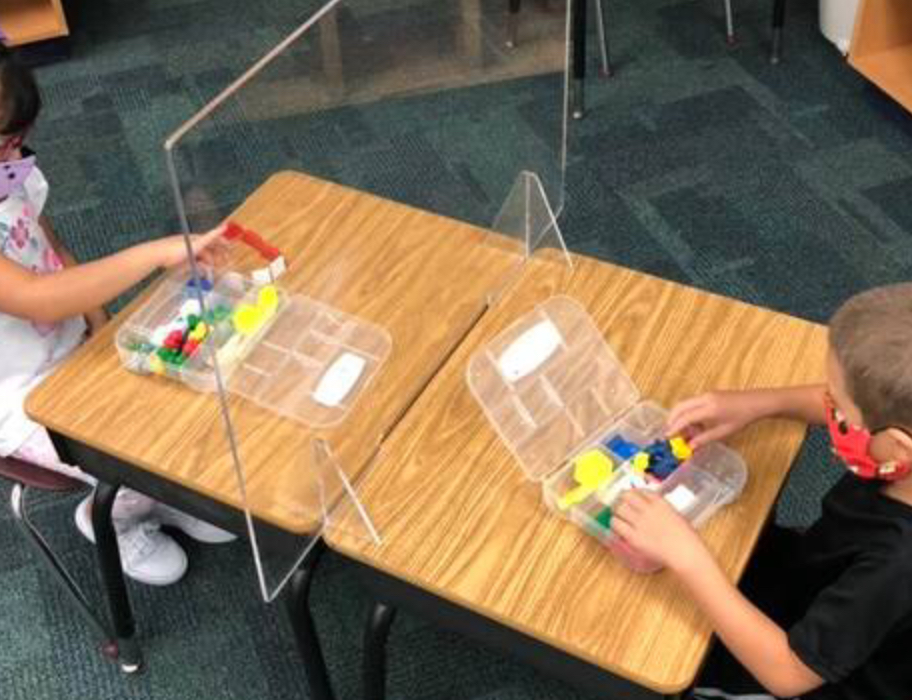
Looking for ways to incorporate interactive play in these days of separation and caution? Playing in pairs can still work with some social distancing hacks :) Use plexiglass or other sturdy see-through materials to set up stations to do paired small-world play! 

Kiddos LOVE to build with all sorts of materials and to make “worlds” where small figures or animals can play. Offer interesting materials, like chucks of wood, twigs, shells, small rocks, glass florist stones, etc. and watch as they construct interesting landscapes. Keeping small tubs to house natural elements spurs children to gather and bring in interesting pieces to add to the bins. Using the plexiglass to separate but bump up against each others’ “worlds” will help build excitement, seeing what their partners are adding and constructing with. Conversations and interactions can still occur, with proper social distancing :) 


Don’t feel trapped by tables either! Use your sneeze guard materials on the floor, with some “tummy time” play, using the same ideas. You will be amazed at how focused some friends will be and able to stay within your social distancing guidelines :) No plexiglass? No problem .... Take those old chart stands, or make a stand from some PVC pipes, and securely drape some sheer shower curtains to divide some space. 


One group I had a few years ago “designed” a Winter Olympics setup - I could see something like this applied to a partitioned play area, geared to individual-but-together play. Little friends like to just construct landscapes with no particular end, so let them create :) 


Play is definitely tricky these days, but try ....

And, have fun!

Monday, October 5, 2020

Social Emotional Learning with Karma Wilson’s Bear books

SEL (Social-Emotional Learning) is a big topic these days, with all that is going on in our world. Anxieties are at an all-time high, even with the little ones. Opening up discussions about feelings can get an assist from reading an applicable story. Extend Social-Emotional Learning through thoughtful literature choices, giving children a way to identify feelings and relate them to happenings in their own lives.  

Help kiddos deal with BIG feelings that they might have - read Karma Wilson's Bear books with them. These stories are beautifully simple, and the illustrations, by Jane Chapman, are SO appealing to the kiddos, and draw them right in.   

These Bear books shine a light on one topic at a time, using the familiar Bear and friends characters, and tackle things like making a new friend, not feeling good, feeling scared, and other relatable issues.


When Bear expresses his feelings, pause and invite your students to share their own feelings ... “Does anything make you scared? What do you think is scary? What do you do when you’re scared? What COULD you do?” Opening up these topics lays the groundwork for future discussions or interventions, by establishing common reference points that you can refer back to when those big feelings emerge at a later time, in your class or at home. 

Act out some scenes with your kiddos to really solidify the learning - have them make faces that reflect feelings. Play a guessing game where friends guess how a friend is feeling by their facial expressions. Use emoji cards (super easy to make!) to give ideas :) 

Have fun while exploring feelings!


Friday, October 2, 2020

Remote Learning: Building Community

While your class may not be in-person, or only partially in-person, it’s still made up of people - little people :) 

One of the biggest concerns with remote learning is that students are feeling disconnected and aren't getting the benefits of being in a group. This is where consciously using Social-Emotional Learning (SEL) can help to make the kiddos feel part of things by building bridges between on-line, hybrid and in- person learners. Aside from targeting these feelings with good literature choices and class discussions, what else can you do?

Think about ways to build community amongst your students, in order to promote togetherness and belonging!

Use photos!

  • Distribute class pics to be kept at home or in school (or both)! Have students send in a photo and put them together grid style (with permissions, of course) to be kept on display for reference during lessons, or anytime. 
  • Make class graphs a part of your day! Use those same pictures, individually mounted on index cards or magnets (business card magnets are the best!!) to build bar graphs that tie in with a daily question, or that relate to whatever lessons you are engaged in. This "polling" method gives everyone a voice from time to time and allows them talking points based on commonalities - or even differences!

Consider pen pals within your class!

  • Have your class send artwork/pictures/letters between class members to strengthen bonds. You might even want to switch partners every so often, to mix it up!     
  • A roving paper class pet or something like Flat Stanley can be fun - each member of the class would take a turn having a visit and writing/drawing about it, and forward to the next, if it's doable :)      

Socializing is important for cohesiveness! 

  • Try to make a point of holding a Social Zoom on a regular basis, including all in the class. No lessons - just a fun activity to have them interact. Maybe show and tell or a game to play - or just taking turns telling something that's going on :)
  • Have a silly theme day from time to time - crazy hair, hat, socks, PJs - make it attainable for all :) Teachers - for those who forget on crazy hat day - keep a roll of aluminum foil handy - turn it into a Hershey’s kiss hat! 

Keep the class bonding, learning and belonging - it's so important!

Have fun!!


Sunday, July 22, 2018

Photo Magnets: Graphs and Surveys

Have some fun with photos! You can do this in a classroom, or use with family members at home!

Take a great photo of each child's (or family member's) face and attach it to a magnet. I find that the business card adhesive magnets are a great size for this, as well as for many other jobs :)

You can laminate the photos for longer life, or copy them onto sturdy paper stock.

Then, have your kiddos generate some questions that they would like to take a poll on ...

Do you like apples? Yes or No questions work great for simple surveys

OR

Decide on some categories for graphing. What color apples do you like? Red/Green/Pink/Yellow

They will LOVE coming up with categories and questions ... the possibilities are endless!

What's your favorite ice cream? Sport? Book? Use your imaginations!

I like to use "Getting to Know You" questions for the beginning of the school year:

How many people are in your family?
Do you have any pets?
How many kids in your family? Brothers? Sisters?

This gets our new friends talking and sharing, and we get to learn more about them. We use the photo magnets to build graphs, starting at the bottom or left side of a magnet easel or board, and building up or over. As each child answers the question, they come up and place their magnet in the appropriate place on the graph. We can count, and label each "tower" (or line) with numbers when complete.

These magnets can teach sorting, ordering, counting ... you can even work patterns in - boy/girl, ages, etc.! As each child takes their turn, there is discussion and interest, and children making connections with each other, bringing cohesiveness to the group. The magnets are reusable and great for so many other activities, too - dividing into groups, taking turns, etc.

Have fun with them!


Wednesday, July 18, 2018

Intentional Exploration: Step Away!

As children move from parallel play to mingling with others, so many changes take place. Child-directed play is so cool to watch, as the children work out roles, compromises, and plans ... and the language development, social skills, and organizational skills begin to show.

Step back and allow the children to develop ideas, formulate questions, and look for answers. It is hard for adults to let go, but so necessary :) You might help launch a project by supplying materials or by "recording" a plan that will help to organize a small group - but it's important to help and then step back out of the action, to watch and support only when needed.

Let the play be child-driven or child-directed, instead of just child-centered :) The adult role should be less of a teacher and more of a facilitator. In everyday play, this may look like observing a play situation and stepping in to encourage compromise or to help players find the right words to ask for what they need or want. Water play took on a new direction here when students wanted to make the balls move by blowing through straws.

In a larger play scenario, as in a whole class study or investigation on a broad theme, a question may come up that spurs investigation on the part of the children, and they may need guidance and organizational help. As they generate questions, an adult may take on the role of recorder, writing down questions and terms that need explaining, in order to build a web or list of "what we want to know."

The best, most interesting way for children to learn, is to dig in and really find answers for themselves. Touching, creating, experimenting ... little scientists can direct their own learning, with support. By working in the background to make sure that materials are available and time is set aside, teachers or parents can aid in setting the stage for great learning!


In the block play area pictured here, some children are making letters from blocks, some are fitting them together like a puzzle, and some are trying to create a balanced wall. Lots of different ideas being tested and played out.


There is nothing like watching one of those "lightbulb moments" occur, when a child gets something and is so excited to share about it!

As always, have fun!


Tuesday, March 14, 2017

Board Game Bonanza

Playing board games with your little ones can be so much fun - and such an unexpected learning tool! Along with things you might think of - counting, letters, colors, etc. - game-playing is also GREAT for practicing social skills and language skills!!

To plan some game time, first you need to pick out some fun, engaging, and visually appealing games to play - little ones love to see lots of pictures and colors. When it is set up right, they can "read" what is going on, even before they can actually read words :)

Some first favorites are Candyland and Chutes and Ladders, both of which are labeled for children as young as three years old. They involve moving along a path on a game board, with some counting, one-to-one correspondence, and unexpected turns here and there. Your child will get practice following directions, taking turns, and being a "good sport"- all great things for them to learn!

   
Another fun option is Zingo, a Bingo-type game, where they have to use visual discrimination to cover their cards, to match the pictures/words shown. They get to fill up their whole card and will have a great time doing so :) There are other versions of this game which highlight numbers, sight words, etc., but the first one is all about pictures.

Any one of the Memory games offered at stores or online will help your child with this same skill, as well as recall and position words. With so many Memory games out there, your child will have no trouble finding a favorite to pick from :) They turn over two cards at a time, looking for matches, and then have to remember where the matches are as the game progresses.

Charades for Kids can be so much fun for children - and get them talking and acting things out! These are great ways to grow your child's language skills, both when it's their turn and when guessing what others are trying to show. All the cards have both pictures and words to choose from, so even non-readers can play!

There are Spot It cards for many different skills - alphabet letters, shapes, numbers - and they all help with visual discrimination and language skills - make sure you're talking with your child while playing! Any opportunity to engage in new vocabulary with your children is GREAT!

I recently saw a card game called Dr. Seuss "I Can Do That!" that looks like kids would have a blast playing! Each card has a different, sometimes very silly, activity to do that will get your children up and moving! It's on my list!

Get some games together, and get going! It will be great time for conversation, socializing, learning, and, most of all ....

Having fun!


Sunday, February 28, 2016

Making Friends: Interview Chat

Little ones don't always know how to start making friends ... or conversation. Give them an assist with a brand new microphone for "interviewing" - home made or dollar store bought :) If you're going with home-made, invent your own from recycled materials around your home. We used a cardboard roll, some silver foil, and stickers.

If you're not looking to DIY, check around at the dollar stores to find one that is durable - I have a toy microphone that is all plastic, non-electronic, and echoes your voice, mimicking a real microphone for a fraction of the cost.

Now, help your child come up with some practice questions, such as "What's your favorite toy? What movies do you like? Do you have a favorite animal or pet?" Ask your child what they would like to know about a friend and practice setting up questions.

Model this behavior with your child by playing an "interview" game to help them know how it works, to prepare for when they are ready to try it themselves. Then, next time you are in a social situation with some other little ones, set them free to make new friends and find out all about them.

Have fun!

Saturday, February 20, 2016

Sharing and Caring

Extend Valentine's Day by talking about friendship, with explicit lessons about making and keeping friends, taught with storybooks. Sometimes our little friends need things spelled out for them ... and what better way than through a story?

Rainbow Fish, by Marcus Pfister, tells the story of a little fish who is beautiful to look at and sought after to play with, but when he snubs the other fish, they stop trying to be friends and he feels isolated. Through learning to share, the Rainbow Fish eventually makes friends, and plays happily with his new friends. (I always stress to my little ones that sharing friendship and experiences is really the best gift of all. )

Corduroy, by Don Freeman, is told from the viewpoint of a stuffed bear who just wants to belong to someone and have a home. This sweet book can be a stepping stone to great conversations about inclusion and making sure no one feels left out - and how good it feels to feel wanted!!

My kiddos always enjoy The Crayon Box That Talked, by Shane deRolf. It gives voice to all the different crayons, who eventually put aside their griping to see that if they all work together, the results can be amazing - a great lesson for those having trouble sharing and working as a team.

Of course, there are always some great on-their-level Clifford books to go with these friendship lessons. Clifford's Pals and Clifford's Best Friend, by Norman Bridwell, highlight friend relationships with characters that are known and loved!

Take some time to read through these titles and others before reading with your kiddos, so you know what discussion points you might want to steer them towards. Or ... let them do the talking and encourage them to share what they feel like after reading these books - and any connections they might have to the characters in the stories. Sit back and listen while you color a picture together of one of the characters - great coloring sheets and extension projects are available on the author's websites.

http://www.marcuspfister.ch

http://www.penguin.com/static/pages/youngreaders/children/features/corduroy.php

http://www.scholastic.com/clifford/books.htm

Or, search Pinterest - great ideas should pop up!


Have fun!

Saturday, September 12, 2015

Books to Love: "Bear Snores On" by Karma Wilson, illustrations by Jane Chapman

Kids LOVE the Karma Wilson Bear books ... This was the first one I discovered and it was an instant hit with my little ones! (There are more!!)

This terrific read-aloud will get your kiddos involved in the story right away with the use of engaging illustrations, by Jane Chapman, and the rhythm of repeating lines. Right from the start, the story builds ... As each new animal joins the story, seeking shelter in the cave, the words get more interesting and the print sizes up and down, from whisper-tiny to shout-out-big! As each new element is added to the sleepy scene, the same phrase caps it off - but it will get louder and louder, as your little friends join in!

Use this book to teach sequencing and pause to recall what happened first, next, and last. Use it to teach concepts of print and have your kiddos point out the words, left to right, one by one. Ask about the characters and make a list of all the animal friends. Try a child-led retelling, for comprehension assessment, using all the sweet pictures. Talk about friends sharing what they have, and meeting new friends. 

Most of all ...
Have fun!

Sunday, September 6, 2015

Little Ones With Big Feelings

When we try something new, we sometimes have feelings of fear, anxiety, or just uncertainty. Little ones just starting school may have these feelings, too, but aren't sure how to express them.

Parents and teachers can help by naming those feelings with them and giving them a funny face, like an emoticon, to label those butterflies-in-the-tummy times. Giving children tools to express themselves can sometimes help avoid those meltdowns created by big changes, and make for a much happier adjustment to school.

Use a little drawing to launch a chat about what your kiddo is feeling. Ask them to think about what face they'd like to have - and then work out a plan with them of how to get there. Maybe arranging a first day walk-to-school partner, or enclosing a family photo in their lunch boxes would help :) Getting your little one talking about feelings encourages them to share fears and dispel any unfounded ideas they may be internalizing.

Try this to get them giggling: Sing a little song with them to help them voice what's going on inside ...

If you're happy and you know it, show your smile, if you're happy and you know, show your smile, if you're happy and you know it - then your face will surely show it, if you're happy and you know it, show your smile! 

Then ...
If you're sad and you know it, make sad eyes ...
If you're mad and you know it, make a face ...

They will be in charge of coming up with some very silly faces :-o

When they complete that all-important first day, make sure you do a happy face check-in. Just another way of getting ready for school!!

Have fun!

Friday, July 24, 2015

Social Skills: Play!

Have fun in the summer - and, use the time to make sure you are exposing your child to new, playful social situations, to prepare the way for school :)

Make a trip to a park or community pool ... or, just take a walk down the street to meet other children  for your child to spend some unstructured playtime with. Playgroups or play dates are also a good option, as long as there is plenty of free interaction between children. To get started, pull out some water toys or set up sand construction tools ... all you really need is some plastic cups and shells or pebbles. Then, let your child imagine what to do with things they find - and share with a new friend! Playtime is their "lab" for discovering what works and doesn't work when forming friendships and working together on projects.


Getting in some non-screen, active time will help your child develop skills such as decision making, planning, sharing - all skills needed in a group setting, like school. The ability to make choices on their own, and to share toys or play cooperatively, are developed over time, in natural play settings. Little ones develop these skills through trial and error, so let them explore :)

In today's world, there are many choices for children's activities that are technology-based, which do not always involve daily interaction with peers. While these may be a favorite part of your child's day, they can detract from building social skills, if used too often. Interactive play time also helps develop your child's speech and language skills, as well as their dexterity in handling objects and art materials.

The more variety your child is exposed to, both through experiences and with handling different toys and art materials, the more they will continue to grow! Keep it simple - there are so many easy ways to inject a little group fun - sidewalk chalk, bubbles, rock and popsicle stick building projects ...

Have fun!

Sunday, January 25, 2015

Apology accepted!

Teachable moments occur in the course of each day ... Sometimes,  the most important, authentic social learning comes from these moments.

Little ones are not born with the ability to know how to apologize. They benefit from you modeling how to do this, so that it becomes natural for them, and then can happen spontaneously in the future. When something happens between friends, siblings, or classmates that calls for an apology, look for your child's ability to stop and say the words or make the gesture. If they aren't able or ready, show them explicitly how to do this :) Just as we model other activities, we can teach accountability, apology, and work on empathy.

Teach your children that apologies are necessary and should be direct and specific. Model this with yourself, as well. When something goes wrong, as it sometimes will, and the teacher (or parent) makes a mistake - possibly attributing blame to the wrong person or misunderstanding a situation - use it as an opportunity to model, as well as to truly apologize.

All of the children who have passed through my classes know "even grown-ups make mistakes." Getting down to eye level, directing my attention to the small person involved, and saying specifically why I am sorry ... "I'm sorry I thought you were talking, when you were actually working so quietly ... can you forgive me? I'll try to look more carefully next time." This shows that child and all observing exactly what an apology should look like and sound like.

I think forgiveness also comes easier to those who know how to apologize. Once your child starts to see the impact of their actions, intentional or not, they also are better able to see their place in the group, and feel the power of forgiveness. A team dynamic in your home or classroom will help your child in many aspects of their lives.

So, have fun - and apologize when necessary!


Monday, June 23, 2014

Mindful Fun in the Summertime!

I've been reading a lot about mindfulness lately ... being in the moment isn't always the easy way to do things, but the benefits are amazing!

Whatever generation you are raising your children in, there have always been distractions from being able to live in the moment and teaching your children with simple things, daily things, that are organic and part of your day. Whether it is housework, laundry, careers, parents, health concerns ... all of these take our attention and use up part of our brain ... and now, it's also screen time. I'm guilty! I probably don't go an hour without looking at either my phone or my iPad.

If you fit this profile, try this ...

As you go through the day, check out what is happening right in front of you. When you're making toast, watch as the butter melts on the bread - have your child notice the heat and what happens. Have your child set the table, counting out forks and spoons as they go. Practice pouring with your little ones and see how quantities fit into different sized and shaped containers. Be mindful of the lessons your child is exposed to through these everyday activities. Build vocabulary by talking and questioning through these "lessons."

Apply the same mindfulness to your summer fun time! Toes in the water - notice how it makes your skin change, how the water droplets can make a rainbow, what the bubbles in the sand are from... Pre-swimming lessons - breathe deeply, see how the air puffs out your body, feel how the air pushes out, float on the surface ... Garden play - watch a bug work, see the buds appear, spread the dirt out and examine the crystal and shiny rock pieces... slow down and smell the roses :)

Look for opportunities as you go through each day to bring focus to the activities at hand. Each simple activity gives your child the opportunity to develop language skills, social skills, and motor skills. It helps them connect experiences and knowledge. Practicing mindfulness in your own life shows your child, through modeling, how to do this themselves. And, it's good for you!

Have fun!

Tuesday, December 3, 2013

Christmas Time: Gift Giving

This holiday season, let your children experience the joy of giving. You can try to teach them … or you can step back and let them learn!

Spark some interest in some of the great organizations that are gathering gifts for the less fortunate. Let your children know that they can help make the holiday special for someone else … elves come in all shapes and sizes! Let them know that they can be "helpers" to spread the Holiday Spirit.

Then, find or work together to make a container that will become a focal point for gathering loose change (and good thoughts!) during the next few weeks. You might take a holiday tin or a special basket or decorate a gift bag … whatever you decide to do will be great!

Next, have your children check around for change in pockets, junk drawers, cars, and the sofa cushions :) It will be amazing how the change adds up! When you go to the store or come home from a day's outings, help your little ones to "find" the change and put it in the container. When you're ready, take that change to the bank or grocery store change counter. If you're not near one of these, or just looking for practice counting coins, you can separate and roll them up yourselves!

You will have enough saved up to go shopping, big or small, for someone who might not have much for the holiday. My little ones always like to pick something for someone their own age, but take your child's lead! Remember to reflect on the giving :)

While you're waiting for the coins to pile up, create some one-of-a-kind sparkling ornaments to share along with your gifts. You'll need some chenille sticks or florist wire, some jingle bells or small buttons or charms, and beads of any and all colors and shapes.


At one end of the wire/pipe cleaner, attach an anchor of some sort - we had some jingle bells, so we used them. Then, let your child create a masterpiece, adding things until its about one-third full. Twist the remainder into a loop for hanging and you have a beautiful ornament/door hanger to give away! (Make another for a great gift for grandparents or someone special!)

Have fun!!

Sunday, November 3, 2013

Thankfulness: A Thanksgiving Project!

Saying thank you is a wonderful way to build social skills with your child. Whether your child received a gift or had a wonderful visit with someone, a homemade thank you card is the way to go!

Fold some paper in half - construction or computer paper is fine … or look for cool card stock papers, available at your local craft store. Show your child how cards typically open, book-style, and show them how words go in a left-to-right progression.

Then, go on a letter search - use all those catalogs that are coming in the mail! Help your child find all the letters to make the words "Thank You!" and get some cutting practice in … so good for small motor practice! Your child can arrange the letters on the card, practicing that left-to-right progression again, an early reading skill :) When thats done, help brainstorm what to say.

Thanksgiving time is also a great time to practice these skills! Get your child in the habit of looking for things to be thankful for - it can be a lifelong thing! And … so many other skills come into play with a project like this!

First, you and your child will use language and planning skills to come up with a list of things to search for that your child is thankful for. Then, hone small motor and visual discrimination skills while searching for pictures and words that fit your list. Get out your scissors and cut, practicing small motor skills. Now, make a placemat of things that your child is thankful for. It could be laminated for use at the table on Thanksgiving - and beyond!


Your child will delight in finding photos and words that represent things he or she is thankful for! (And get lots of practice at so many things!) You could even make it a counting project … add a new thankful thing each day :)

Have fun!

Sunday, October 27, 2013

Making Friends: Books to Read

Such a big part of the early years is moving beyond the world of self into the world of friends. Just as we learn many other concepts, our young ones need "friend behavior" modeled and practiced to get started.

Make time for interaction with other children - get out, go for walks, stop and check out areas where your children might spend some unstructured time with others. It doesn't have to be a special dance or sport or art class - although these can be great fun, too! The important thing is that your child gets a chance to mingle and learn what is expected behavior with friends and what isn't! Practice makes …
well, maybe not perfect, but better :)

As another strategy, read to your child from consciously selected books about friendship. There are so many wonderful books that allow children to see characters whose feelings mirror their own, giving them voice. For little ones, the Rainbow Fish books by Marcus Pfister are great, as are the Bear books by Karma Wilson. They have simple language and engaging illustrations, just right for teaching things like sharing, making friends and caring for our friends.

For older children, Chrysanthemum by Kevin Henkes is a personal favorite. Children can see what bullying behavior looks like and sounds like, and will vow never to be like that! Chester's Way, another Henkes story, is also fantastic for friendship themes like taking turns and having more than one friend.

For a list of books on making friends, click on:

https://www.themeasuredmom.com/books-about-friendship/

Reading about these themes opens the door for discussion - never let an opportunity get away to help your child develop these much needed social skills.

Above all, have fun with it!

Tuesday, June 18, 2013

Early Learning: Summer Skills

Keep your child's skills up over the summer with some simple, everyday activities!

Play! Set up some unstructured play time for your children, when they can interact with others and create, collaborate, and converse. Open-ended play works well to allow children to discover new uses for things and lets them learn to play with others. Genuine conversation will help your child develop and practice language and social skills.

Explore! Find a new park, examine the details on your usual walks, try a new route when you're going somewhere ... All these will open up your child's world a little, without breaking the bank. If you can get in a day trip or two, find child-centered, child-friendly spots to visit. Zoos, farms, playgrounds, music and art events will all give your child new experiences to draw from.

Move! Singing and dancing your way through the day will help your child remember all sorts of things. Pairing facts with music has been shown to help memory ... sing songs about the weather, the days of the week, counting songs, ABC songs! There are so many out there! Some of my favorites come from www.drjean.org.

Count! Count everything you see. Use one-to-one correspondence when you count, assigning numbers to each item. Encourage your child to do as you model. Count forward and backward ... count steps, cookies, Legos - add them up and then take some away. Make it fun and have your child make up number stories, too!

Read! Read aloud, listen to reading, talk about reading ... In short, make reading a daily event! Your child will benefit from reading all sorts of books with you. Picture books, fiction stories, non-fiction informational texts ... Whatever catches their eye! Pair a fiction book about their favorite animals, bugs or dinosaurs with a vivid pictorial non-fiction book and have them discover and talk about the differences. You will be amazed at the discussions you can have, even with little ones.

Have fun!!