Showing posts with label growing things. Show all posts

Saturday, March 11, 2023

Printmaking with Nature

 As the weather warms up here, everyone wants to be outdoors, especially the kiddos. Looking for lessons that can be done outdoors is one way to satisfy that longing for fresh air! 

Printing with the colors of spring is a delicate process but has so many benefits for your littles. Teach them to retrieve the flower parts that have fallen already, or those that are in abundance or wilting, so as not to take away what animals and insects need :) Talk about food chains in the simplest terms and about how important all of the pieces of the chain are. 

It is also a great time to talk about having respect for growing things, and to give the plants a chance to survive and thrive. Children are capable of being very gentle and should understand their impact on gardens and wildflowers - respect for all nature! :) 


Bring paper and rolling or pounding tools (maybe from playdoh or kitchen sets) outside.  Demonstrate how to place the plant material gently between the folds of the paper and press, or pound, the color onto the paper - and then check out what you have made! The color and shape may transfer or become another shade when pressed on the paper. Very wet flowers and leaves won’t work for you, and dried leaves or plants are too brittle to transfer well. 
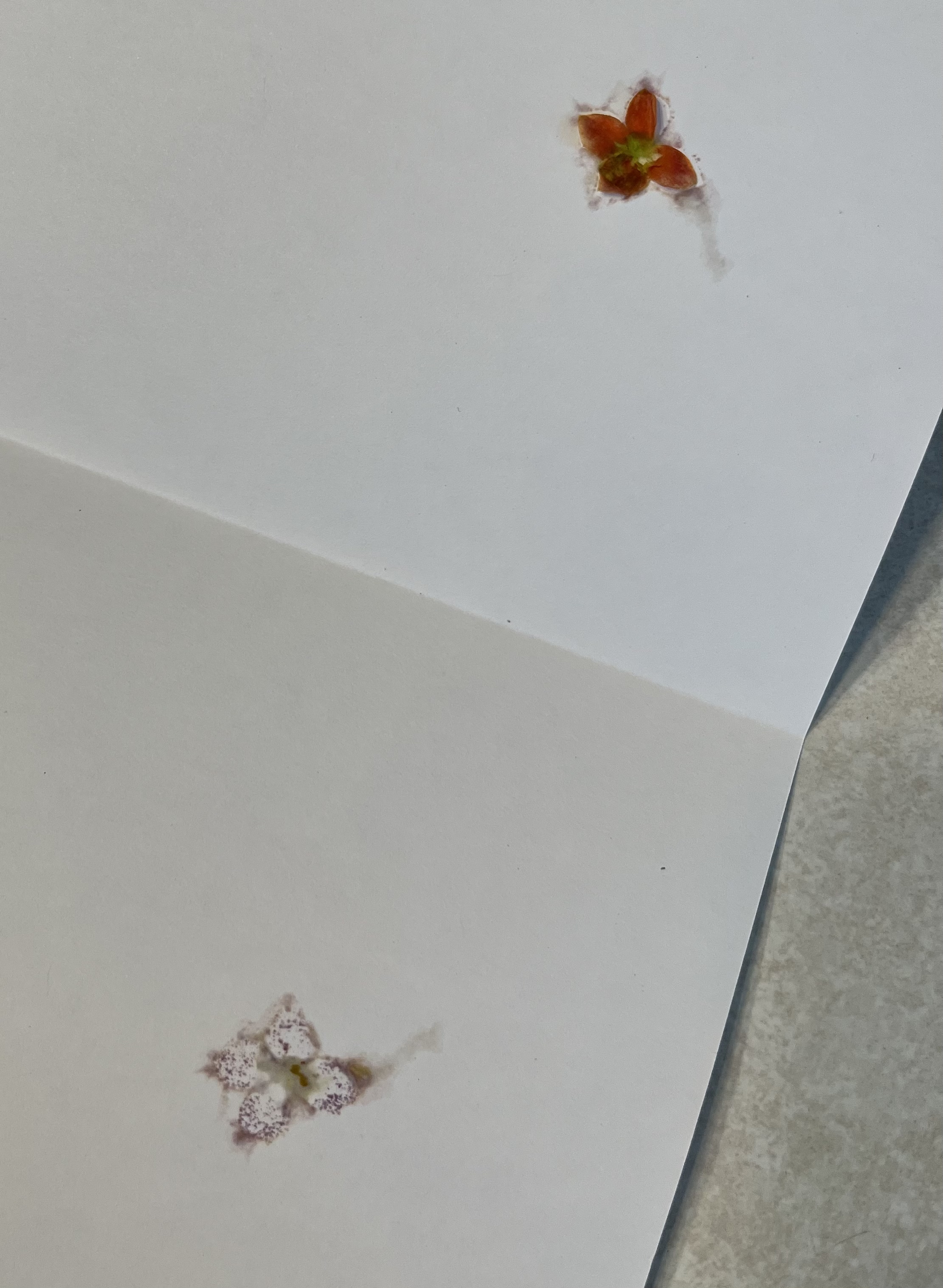

Trial and error (or success!) is a great practice for children, as they need to learn stamina in experimenting. Watch for students who are willing to share information and partner them with those who may need some encouragement. 

This can be a great team building experience, as you hopefully see empathy and excitement build for all the group to be successful. As children learn to work together, they can experience great self-image and feel good about cooperating. Encouraging these traits through play and creating is THE BEST! 

And, as always, have fun!


Sunday, April 25, 2021

Learning Outdoors

"Why not have class outside?" Easy for them to say .... ;) But ... with some prep, it can be fun and productive!

In these continuing pandemic days (or really anytime!), as the weather gets nicer in the northern hemisphere, we can look to the outdoors to supplement our classroom space, but only if our needs can be met there for safety and security :) 

First, think about safety. Is the surrounding area conducive to having class outside? Are there too many distractions from heavy traffic or loud noises? Is it too sunny/shady? The physical position of the teacher (and other adults) and students is also important, as you want to make sure no one is out of sight or close to hazards (like streets or steep slopes).

Next, this plan takes some prep work for the teacher, instead of a spur-of-the-moment decision. Try a rolling cart or carry basket pre-loaded with all the supplies you might need. (A small white board, markers, some chalk, sticky notes, etc.) Students could have pre-made "seats,"such as folded beach towels or small pillows tied inside plastic shopping bags for avoiding dampness. Clipboards are always a great addition, making things "official" :)

Then, choose what part of your daily lesson would work best outdoors. Some topics really work in outdoor settings, such as: 

  • measurement or making patterns in math - Take your measurement tools outdoors and use objects found there to extend your lesson. Or, find natural objects outdoors to arrange and extend patterns on the sidewalk or in a grassy area.
  • growing things or force and motion in science - Take these topics outdoors and plant in the dirt or in raised containers or offer wood planks and blocks to encourage experimentation with force and motion ideas. Add a few balls or toy cars and see what theories your friends can prove.
  • poetry or descriptive writing or really any type of creative writing - Any age students would enjoy laying outdoors on a beach towel and writing/drawing about what they see/feel/hear.
  • reading aloud with discussion - This would be great, even as a last-minute idea, and can break your day up, allowing for stretching and movement, as well.
  • independent reading/paired reading (more room to spread out)/small groups - Experiment with different set-ups for reading time and spread your class out a little. Have something in mind to hold them accountable for what they are reading during this time. You may choose to pull a small group, as long as you can still monitor safety for the others.
  • art with watercolor paints, chalk, recycled sculptures, nature sculptures - There are so many art projects that can be enhanced by being outdoors, and help your children connect art and nature.
Have Fun!


Saturday, May 9, 2020

Remote Learning: Growing Things (With What You Have at Home!)


Want to grow something and show your children at home the process?

No seeds? No problem!!

Don't despair if the sunflower project you always do in the Spring isn't able to work with Remote Learning! Look around at what you (and your students!) already have at home - you'll be surprised what you (and they) can do when you start thinking outside the box :)


Soon after we realized we weren't going back to the classroom anytime soon, I looked around at what I had - in my fridge, my pantry, on my block ...

The first thing I tried was rerooting romaine lettuce. I had a package of lettuce with the stalk part still attached and I had seen a YouTube video showing how to regrow the lettuce. I can't believe how simple this was! Just cut the lettuce about 1 1/2 inches from the end and take the stem piece and set in water in a small container. Overnight, I could see the regrowth. Change the water daily and within a week or two, you'll see roots start to appear. Plant in dirt and watch it grow!


Seeds from an apple were next, after eating it, of course. I put the seeds into a sealed plastic bag in the sunlight, with a small, damp paper towel and waited to see what would happen. This took longer, but after about 7-8 days, roots and a stem started to appear. A few days later, it was transplanted into dirt and continues to grow :)


Look around your environment, too, not just in the house! These "helicopters" fall from a tree near me every year, so into a bag they went, and .... after two weeks (patience!), a small root system was kicking in!


Carrot greens can be grown from the tips of carrots - good for seasoning and garnishing :)


To grow potatoes, I cut a section of a potato that had some growth at the eye, and put that in a plastic bag, too. I left it in a sunny window, and forgot about it ... until this root system caught my eye :)


No seeds, no problem! You can teach and they can learn - using things that are already around in the home!

Have fun!