Sunday, October 27, 2013

Making Friends: Books to Read

Such a big part of the early years is moving beyond the world of self into the world of friends. Just as we learn many other concepts, our young ones need "friend behavior" modeled and practiced to get started.

Make time for interaction with other children - get out, go for walks, stop and check out areas where your children might spend some unstructured time with others. It doesn't have to be a special dance or sport or art class - although these can be great fun, too! The important thing is that your child gets a chance to mingle and learn what is expected behavior with friends and what isn't! Practice makes …
well, maybe not perfect, but better :)

As another strategy, read to your child from consciously selected books about friendship. There are so many wonderful books that allow children to see characters whose feelings mirror their own, giving them voice. For little ones, the Rainbow Fish books by Marcus Pfister are great, as are the Bear books by Karma Wilson. They have simple language and engaging illustrations, just right for teaching things like sharing, making friends and caring for our friends.

For older children, Chrysanthemum by Kevin Henkes is a personal favorite. Children can see what bullying behavior looks like and sounds like, and will vow never to be like that! Chester's Way, another Henkes story, is also fantastic for friendship themes like taking turns and having more than one friend.

For a list of books on making friends, click on:

https://www.themeasuredmom.com/books-about-friendship/

Reading about these themes opens the door for discussion - never let an opportunity get away to help your child develop these much needed social skills.

Above all, have fun with it!

Wednesday, October 16, 2013

Great Halloween Reads!

Halloween is a fun time - and a fun time to read some GREAT stories!!

Two of my favorites to look for:

Too Many Pumpkins!
by: Linda White / Megan Lloyd

This story teaches on so many levels! Work on sequencing with the story of pumpkins growing, from splattered pumpkins to sprouts to vines, etc. Show how it becomes a circular story, with the seeds at the end of the book. The pumpkins' growth, despite not being wanted or cared for, is displayed through the book's interesting artwork and wonderful words.

There is also the deeper story of the book's main character moving from an isolated, unhappy life to having an entire group of neighbors who join her for Halloween festivities. "Too Many Pumpkins" is a consistent favorite with little ones up through primary grades.

Pumpkin Jack
by: Will Hubbell

Kids love this book! Any child who has had to throw out their pumpkin after Halloween will appreciate the way Tim disposes of his pumpkin - in the garden. It has great lessons about the after cycle of the pumpkin's life ... From a Jack-o-lantern to a mushy mess to a snow-covered mound. Then, in the Spring, new life brings Jack (and many others!) back to the garden! Great illustrations and  descriptive metaphors that kids can understand make this a book to treasure.

Have fun reading!!

Wednesday, June 26, 2013

Summer Journals

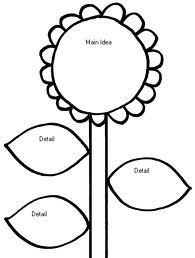
Summertime is a great time for your children to launch or practice their skills as writers. Grab a journal and help them keep track of things that you do, places you go, special times. Whether your children sketch a bit, dictate thoughts or even write a few words, the process of brainstorming and writing about their experiences and feelings will help them develop skills needed to become writers. Using simple graphic organizers is a great way to gather ideas and your children will enjoy deciding on things to include.


Start out by letting them choose or personalize a journal or writing notebook. Maybe they'd like to put some photos on the cover or cut some big words or pictures out of magazines. Encourage them to express what they feel. Try to make sure that there is time set aside for journaling on a regular basis to get in the habit of recording those thoughts.

Don't focus on the mechanics so much in the beginning ... just get some ideas on paper. Once you've captured some initial ideas, you might go back and add to the writing, through interviewing your child or rereading and asking, "What else did you want to say?" or "Why was that important to you?" You can always go back later to choose things to work on together, through revising and editing.

"YOU are a writer!!" Say this often to your children and they will indeed become writers! Getting those ideas is a big part of the process - the rest will come in time!

Have fun!


Monday, June 24, 2013

Early Learning: Math Skills

Whatever developmental stage your child is at, it is never too early to introduce a little math play. Numbers are a part of everyday life and your child will be more comfortable with them when school starts if they're presented that way :)


I tell my little ones that Math is like magic, and then I show them some of the "magical" patterns you can make with numbers! Even finding patterns on a calendar can seem like magic when you're little - we take out our calendar number cards and try to make up new color patterns - one side is red, the other black! Let your children experiment with numbers, using cards or little magnets, and see what interests them.

Use your child's sense of rhythm and love of music to "hear" Math - clap patterns and count beats while you're singing and dancing! Make up some new beats and play "Follow the Leader" with clapping. Magic!

Block play can be a math lesson - making towers with two different colored blocks (patterns, sequencing) and then counting them up (one-to-one correspondence) sneaks math into a favorite pastime!

Continue counting other objects, noting one-to-one correspondence. Count fingers, toes, toys, cookies, cars ... you get the picture! Encourage your child to repeat the numbers and practice counting on their own, when they're ready.

Older preschool and school-aged children can work on solutions to simple word problems, using a group of like objects. You might put together some buttons, blocks, small figures - and get ready to practice some Math facts. If Mom has two Legos and You have three, how many do you have together?


When they've mastered that, try this!

First, count out a total number of objects - start small with a number like 5. Then, separate this amount into two groups ... Let's say 2 and 3. Record the number of objects in each group and practice writing the numbers. Relate the written numerals to the number of objects and have your child practice counting each one. Make a simple number model to represent what you're playing with: 2+3=5.

 
Now, put the objects back in a pile and separate again into different groups - 4 and 1. Try the same thing, recording the numbers, and notice the total. Write a new number sentence. Make sure to notice how the two different groups add up to the same number! See if you can find other combinations - then, try a new number. If you line up all the math facts on a piece of paper, your child will be able to notice some more Math "magic!"

All these Math games will give your child some "number sense!"

While you're at it, have fun!


Tuesday, June 18, 2013

Early Learning: Summer Skills

Keep your child's skills up over the summer with some simple, everyday activities!

Play! Set up some unstructured play time for your children, when they can interact with others and create, collaborate, and converse. Open-ended play works well to allow children to discover new uses for things and lets them learn to play with others. Genuine conversation will help your child develop and practice language and social skills.

Explore! Find a new park, examine the details on your usual walks, try a new route when you're going somewhere ... All these will open up your child's world a little, without breaking the bank. If you can get in a day trip or two, find child-centered, child-friendly spots to visit. Zoos, farms, playgrounds, music and art events will all give your child new experiences to draw from.

Move! Singing and dancing your way through the day will help your child remember all sorts of things. Pairing facts with music has been shown to help memory ... sing songs about the weather, the days of the week, counting songs, ABC songs! There are so many out there! Some of my favorites come from www.drjean.org.

Count! Count everything you see. Use one-to-one correspondence when you count, assigning numbers to each item. Encourage your child to do as you model. Count forward and backward ... count steps, cookies, Legos - add them up and then take some away. Make it fun and have your child make up number stories, too!

Read! Read aloud, listen to reading, talk about reading ... In short, make reading a daily event! Your child will benefit from reading all sorts of books with you. Picture books, fiction stories, non-fiction informational texts ... Whatever catches their eye! Pair a fiction book about their favorite animals, bugs or dinosaurs with a vivid pictorial non-fiction book and have them discover and talk about the differences. You will be amazed at the discussions you can have, even with little ones.

Have fun!!

Friday, June 7, 2013

Poetry Fun!

Introducing poetry to younger children may seem ambitious ... but it can be so much fun! They love to hear poetry in songs and fingerplays - so why not try writing some! And ... it doesn't have to rhyme!

Encourage your child to choose a topic that they have strong feelings or memories about - maybe a favorite person, place or object. Then, have your child dictate words about that topic to make a moveable "poetry pile" of word cards. You can help the process along with some questions like, "How do you feel when you're with ...?" and "What do you love most about it/her/him?" "Close your eyes and describe ... to me" works well, too! We chose "cupcakes" and had fun listing some yummy attributes ...


Once you have the cards written, explore them and repeat the words, noticing the beginning of each one and looking for familiar letters. Have your child try to repeat a few back to you :) Next, let your child play with different arrangements, moving the cards around until they come up with the arrangement that sounds best to their ears ... like a song!

It's also fun to arrange the words in the shape of the object when writing them down or to write them around in a circle and leave space in the middle for a picture to be drawn. I think we'll try writing our Cupcake Poem in the round and make a delicious picture for the center!

You can choose who will be writing the words of the finished poem - copying from the cards might be exciting for your little ones, if they're able! Most of all, be creative - and, have fun!

Sunday, May 19, 2013

We Are Scientists: "Discover" Symmetry

Have some fun with symmetry in nature ... It's perfect for Spring!

First, find some beautiful non-fiction books that show full-winged pictures of a variety of butterflies and bugs. Have your children inspect some close-up pictures to "discover" all on their own ... lessons stick better that way! Direct their attention to specifics in the photos and have them do the "noticing."

There are also many children's book authors who use beautiful artwork displaying symmetry in fiction stories depicting animals or insects. The books might tell about the seasons, life cycles, or natural occurances such as camouflage - you might have some on hand that are already favorites of your children. Eric Carle's book, "The Grouchy Ladybug," shows symmetry in the collage work he does, even though it has other themes. Use resources you have on hand to draw attention to something new!

Then, get out there and explore! Make sure you have a "kit" to inspire your little ones to get into the activity. Our kit consisted of some plastic tweezers, magnifying glasses of different sizes, some index cards (for lifting delicate specimens), and a small container with holes to temporarily house what we found. It all fit in an old lunch box ... a small sand bucket would do nicely, too! Your child will be delighted to find all sorts of examples in the critters you uncover! Make sure they are using their words to describe what they see - and you could even bring along a sketch book and some crayons to do critter portraits :)

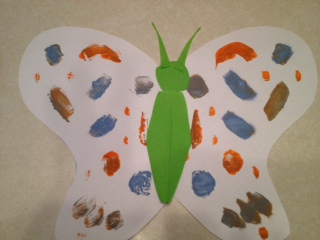
For some fun artwork, when you're back from your travels, fold a large sheet of construction or other heavy paper in half. Draw the shape of a butterfly's wing (or another bug's) on one half with the center of the body at the fold. Cut through both pieces of paper so when you unfold, you have a butterfly shape. Have your child make a design on only one of the wings with some acrylic paint and then fold and press gently to transfer the design to the other wing. You should end up with a mirror image - symmetry!


You can finish up by adding a body, head and antennae with some paper scraps, pompoms, or whatever you have on hand!

Have fun!