Showing posts with label letters. Show all posts

Tuesday, October 5, 2021

The Reading "Game"

When kiddos first begin to notice the printed word all around them, it is a GREAT time to tap into their natural curiosity and begin to name the letters for them to learn. Making it into a game makes it that much more fun and appealing :)

When the kiddos ask about signs or symbols, challenge them to tell YOU what it means. Follow their lead to gauge interest and start with letters that are part of their world - letters they see every day and ask about! "What does that say?"

Point out letters casually - and make the primary sound the letter makes, as well as naming the letters. This connects sounds to letters and sparks more connections and interest. 

Play games with their beginning name letters and then words that are important to them, like Mom or Dad. When the sound/letter has more meaning to them, they will likely be more interested. Interest leads to retaining information, as well.

Call attention to words in your everyday life .... Muffin! That sounds like mom at the beginning ... mom, muffin, .... what else?

******************************************************

Then, over time:

Make a word collector ... Draw boxes on a big sheet of paper or make a notebook. Add drawings or clippings from magazines with pictures of words that start with different beginning sounds.... label them and repeat them in groups, mom, muffin, mop, mountain. 

We had fun making matching cards for beginning sounds, using magazines and index cards - got in a little cutting and gluing practice, too! Car and candy are a match for beginning sounds, so are bed and bathroom! These were easy to find in brochures that came in the mail!

******************************************************

Keep the format loose and don't try to make perfect letters at first - there's time! Make sure when you do, that you are teaching them the right way - make your letters from the top ... pull down from the top to make tall or other letters (b, h, i, j, k, l, m, n, r, p, t, etc.) start with a letter c to make others (c, a, o, d, g, q). Making letters this way helps them later on, when they are learning how to write cursive.


Remember, have fun!


Sunday, December 6, 2020

Learning Tools: Recycled Bottlecaps

Looking for ways to do more hands-on learning? Running short on supplies with remote and hybrid learning situations? 

Make your own learning manipulatives to use at home or at school! 

Recycled plastic bottle caps are easy to gather in a short time and come in a variety of colors and sizes. They are perfect for so many different uses - in literacy, math, and even art. 

As you work on letter recognition, you and your kiddos can put together a set of upper and lowercase letters for practice. Play a matching game with them, placing the uppers over the lowers and checking them together. You can also supply a name strip with the alphabet for self-checking :) 

Write sight words on larger caps and use them to manipulate into sentences - even “silly sentences” can be lots of fun and get your little friends interested in reading and writing :) Then, have them copy the sentences down for some writing practice - good fine-motor work!

At math time, use different colored bottle caps to make patterns - ABAB, AABAAB, ABCABC. Repurpose your collection to act as counters when making up or solving addition and subtraction number stories, or practicing basic math facts. See what other uses your budding mathematicians will come up with! Maybe sorting by attributes - size, color, ...?

Finding art applications is easy, too! Some friends may use them as “tiles” in a mosaic or to arrange into pictures. Others may use them as stamps or tracers with pencils to incorporate shapes into designs. They can also be glued into 3D forms as parts of sculptures, possibly using other recyclables. 

The opportunities are endless - see what your kiddos come up with! 

Have fun!


Wednesday, October 14, 2020

Learning and Blending Sounds with Movement

When learning sounds or how to blend sounds to read, adding movement activities can help for increasing focus and solidifying the learning. 

There are lots of programs with motions that connect letters to sounds - if you have access to one or can find one on YouTube, it’s a great way to help your child(ren) make connections between sounds and letters. If not, consider making up one of your own!

As a next step, blending across your fingers (touch each one as you make a sound) or up/down your arm (chop each sound at a different point on your arm) are great ways to start with helping beginners understand the art of blending sounds together to make words.

Sometimes it helps to add objects and hand movements to understand blending. For CVC (consonant-vowel-consonant) words, grab three objects and touch each one as you say a sound - blending as you go. “B-A-T bat.” 

For even more movement, use some painters tape or sticky notes to make letter spots on the floor or go outdoors with some chalk. Make letter circles or squares to hop onto or into, to blend and make words. Think of a word, then jump from letter to letter to make it! Once you turn it into a game, and practice it, they will start to play it on their own. 

Keep it simple to start! Begin with one vowel and a few consonants within reach of each other and take turns building words. Kiddos love an example and then freedom to make their own choices. Even “nonsense words” can count - if the sounds are right! Give guidance as needed :) 

Have fun!

Tuesday, September 15, 2020

Learning to Read and Write with Rocket

The Rocket books by Tad Hills are great tools to help kiddos gear up to learn about letters, sounds, and words to read on their own.

Rolling them out, book by book, over a course of weeks or months, with the continuing characters of Rocket and his “teacher,” helps the children see how the steps fall into place with the basic building blocks of reading and writing!! Use them as anchor texts to refer back to, keeping Rocket, the character, in their minds as a new reader and writer :) 

Start out with R is for Rocket to introduce the letters, one by one, and get excited about attaching importance to letters and sounds. Each page shows a few words, with pictures, to go with each letter, in ABC order, with Rocket and his friends as characters. Discussion and games can go on to extend the book, by looking around for other words that also begin with each letter, and matching them to the written words on each page :) 


Next up, when you’re ready, is How Rocket Learned to Read!! This follows a story format, as our buddy Rocket is approached by a little yellow bird who wants to be his teacher and to get him interested in reading. Rocket is resistant at first but eventually gets SO excited about learning words that it’s contagious!! Your kiddos will get excited too!! They may want to start labeling things around the house or classroom ... so let them! Grab some index cards, sticky notes, or cut up some paper and have some fun stretching words out to hear all the sounds!


When the time comes to launch some simple writing, Rocket Writes a Story is the third in the series and revisits the character of Rocket again. This book shows your kiddos how to put the words they know together, to get their thoughts down on paper. Rocket goes through all the same dilemmas as beginning writers do ... coming up with an idea, getting started, figuring out how to put words together in a sentence. He gets encouragement from his “teacher” who has great ideas, helps him get started, and cheers him on throughout! Your kiddos may see their own struggles reflected here and will cheer for Rocket when he gets going with writing! Use the word cards from the previous exercise and add in some basic sight words to help your children arrange word card sentences. Then, copy onto paper ... pretty soon, with practice,  they’ll be taking charge and putting it all together themselves. 


Get some inspiration going with Rocket and friends - and have fun!!

Thursday, August 27, 2020

Q Camp: Getting Some Final Summer Fun In!


It's getting close to the end of the summer here and there are still many restrictions in place. Looking for at-home things to do? Here are some links to throwback posts that gather some fun activities together for you :)

#1: One favorite, which is low to no-cost, is "painting" with water out on the hard pavement - sidewalks, driveways, whatever you have :) Here's a link to fun water painting activities:

https://makeearlylearningfun.blogspot.com/2015/08/water-painting-fun.html


#2: Plan some food fun for a rainy day :) Playing with food is usually discouraged but, using what you have in the house, you can figure our some fun "lessons" that encompass math, art, science, etc.

https://makeearlylearningfun.blogspot.com/2015/08/an-apple-is-not-just-apple.html


#3: Literacy for the win! Look for a great book to build a fun activity with! Remember, YouTube can help out with finding books, if you don't have it or don't want to mingle to get it! Googling images will put the cover pics right in front of your child :) It's great when interest in a story generates an extension activity - check this post out for some literacy and small-motor fun!

https://makeearlylearningfun.blogspot.com/2018/08/books-to-love-commotion-in-ocean.html


#4: Character book bags can be so much fun! Team up with a few friends to try out this activity - friends who haven't seen each other or might be remote learning might enjoy this interaction by dropping off and circulating a character or two :)

https://makeearlylearningfun.blogspot.com/2011/08/character-book-bags.html     


#5: This post, entitled "Summer Fun!," gives you a bonus - 10 more ways to extend your summer fun!

https://makeearlylearningfun.blogspot.com/2011/07/summer-fun.html


End your summer with a great week! And - have fun!!


Sunday, February 26, 2017

Learning with Lois Ehlert

When you start to plan some garden activities, make sure that you gather up Lois Ehlert books to help your little ones understand what the garden is for! The illustrations and vivid colors are so attractive, and the messages are clear.

Start with "Planting a Rainbow" to illustrate the planning and planting process. Colors are the highlight here, as the flowers in the flower garden all represent the colors of the rainbow. The process of growing from seeds and bulbs is also shown.

"Growing Vegetable Soup" is a great book to show the growth of vegetables from start to finish. Little ones are not always sure where their food is coming from, and may need the visuals to make connections between what they eat and how it come to be. Combine this with a trip to a local farm or farmer's market to get your child's brain thinking outside the supermarket.


"Eating the Alphabet" is another great book for seeing what different foods people eat, including some your child may not be familiar with. It relates each food to alphabet letters, both upper and lower-case, for authentic learning. When children can see and experience things that they read, it becomes more real and stays with them longer. Learning the alphabet this way will give them reference points - visuals - to connect to.


Lois Ehlert is the author of so many great learning books - "Color Zoo" teaches shapes and animal names, as well as giving children a view into how pictures can be broken down into shapes, for easier drawing :) Die-cut pages and surprise flipsides give every reader something to look forward to, as the pages turn.

In the fall, "Leaf Man" and "Red Leaf, Yellow Leaf" are wonderful tools for learning all about the changing of the leaves and the process that deciduous trees go through each cycle. The author' s creative use of natural materials to make pictures in "Leaf Man" will have you and your child seeing leaves in a whole new way! Try to make your own leaf creations when you're done :)

"Snowballs" is a crowd favorite for wintertime - something for every season! The use of natural, found items in her pictures is one of her style choices that delight young readers, as they find things on the page that are familiar.

Lois collaborated with other authors as well, illustrating the "Chicka Chicka" books, among others, so it's easy to see why her style is so familiar and attractive to little ones - and everyone!

Have fun reading!

Tuesday, February 23, 2016

Playdough for the Win!

There are SO many things you can use playdough for - make all of them super fun!!

Small Motor Play
  • Roll it out and cut out shapes with cookie cutters
  • Pinch and pull to strengthen muscles
  • Cut thin ropes with scissors for resistance
Literacy Practice
  • Roll out "snakes" to make letters, numbers and shapes
  • Get letter or number stampers and make impressions in the play dough
  • Use as base for thematic play with sticks, blocks, yarn to recreate a story 
Science
  • Mix up some playdough with your kiddos - make predictions, measure, add, see the ingredients come together
  • Take shells or other natural materials and make imprints like fossils
  • Use small figures of animals, dinosaurs, etc. to make tracks


Sensory Play 
  • Add dry jello to scent it 
  • Add salt to make it gritty
  • Add glitter to make it sparkly
  • Add all to make it super fun!
  • Introduce beads, buttons, or fake jewels to up the interest factor

Math
  • Take a muffin tin, add tape with different numerals written on it to each cup and roll small balls to make the amount in each cup.
  • Make playdough pancakes and serve them up on different plates to give equal portions - one for you, one for me, etc.

Ask your little ones what THEY would like to do with the playdough - they will come up with even more ideas :)

Have fun!!


Monday, September 28, 2015

Rock On!

Have some fun with rocks - and let your little ones explore and learn! We took some stones that were flat on at least one side, and used a paint pen to make upper-case letters on them. Then, we put them out on a table, and . . .

First, there was lots of interest ... and lots of questions!

"What are these? What do we do with them?" We didn't ask our little ones to do anything in particular with the rocks, but soon they were searching for their name letters and lining them up, calling friends over, and trying out new combinations :)


They noticed that some of their names started with the same letter, and that they had to share letters to make friends' names.

Next, maybe they'll want to play a match game - we'll need more rocks!

How about numbered rocks to line up in order ... or addition rocks! We could try shapes and patterns one day, too!

Have fun!


Sunday, August 16, 2015

Water Painting Fun!

The last days of summer are coming fast ... running out of things to do with your little ones?

If you have some water in a bucket and an old (or new!) paintbrush - find a surface like a sidewalk, driveway, or concrete steps, and see what happens. Fun for the pool, too!

They may want to paint the whole surface. They may begin to make shapes or squiggles ... all great for motor planning and control!

You can model a little, if you want ... in a parallel playing sort of way :) Draw a letter - maybe the first letter of their names. Something about wet letters gets their attention. Use different sizes of paintbrushes for different effects.

You can also make chalk shapes, letters, numbers .. and, then paint over them. Any "mistakes" quickly evaporate and then, they can do it again! This would be great practice for back-to-school - getting familiar with names, shapes, numbers, etc. - in a very no-fuss, enjoyable way :)

Have fun!

Saturday, February 22, 2014

Letters make Words!!!

Learning that letters match sounds is an early reading skill - one that must come first in order to have a foundation to build on :) As your children grow, however, they will get interested in putting those letters together.  When they discover that LETTERS MAKE WORDS, it's time for the next step!

When your little reader is ready for this next step, introduce some fun word-making and word recognition into your day! Use activities that will keep them excited about learning ... like these:


  • Take a colored tray and pour in some salt - have your child trace letters for simple three-letter words, blending the sounds as you go.  Show how a word family can be made by changing the first letter. Just rub out the letter and change it.  Dry erase boards are also fun for this!


  • Make a flip book from spiral bound index cards. Cut the index cards, while still attached to the spiral,  into two sections - the left side about one-third of the page and the right side two-thirds. Put single consonants and consonant blends on each page of the left side and common word family endings on the right side. Experiment by flipping and trying to make words :)


  • Use your old alphabet blocks to create sight words ... just program some index cards with words on your list and let your budding readers match up for practice!


  • Then, take or make some blank wooden (or cardboard) blocks and turn them into sight word blocks. Use a Sharpie and your best handwriting (or your child's) to fill each side with common sight words. Use each word more than once to make it more user friendly. Your child can use them to build short sentences - it will be a big hit!


Above all, have fun with it! When it's fun, it works!

Sunday, November 3, 2013

Thankfulness: A Thanksgiving Project!

Saying thank you is a wonderful way to build social skills with your child. Whether your child received a gift or had a wonderful visit with someone, a homemade thank you card is the way to go!

Fold some paper in half - construction or computer paper is fine … or look for cool card stock papers, available at your local craft store. Show your child how cards typically open, book-style, and show them how words go in a left-to-right progression.

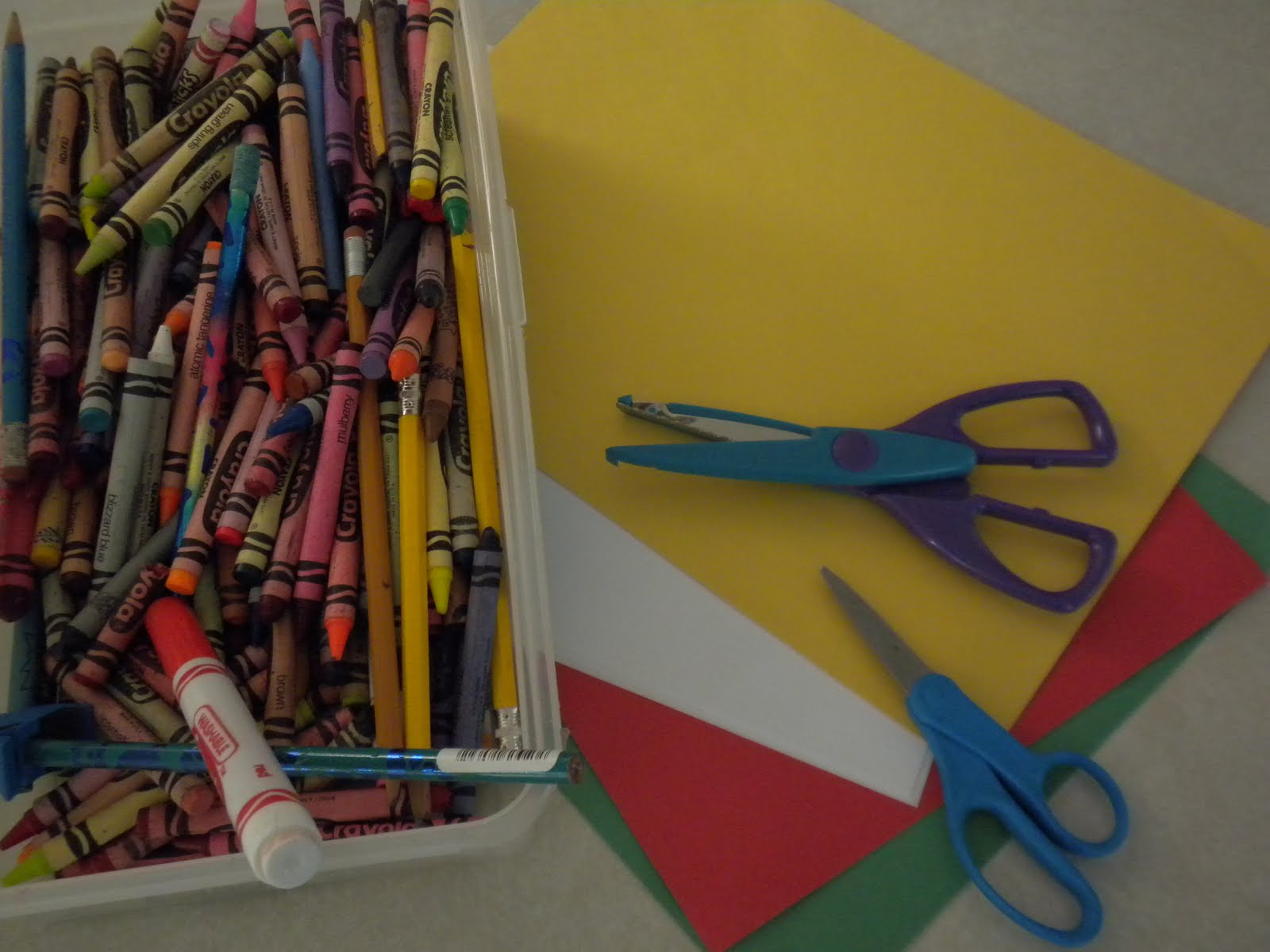
Then, go on a letter search - use all those catalogs that are coming in the mail! Help your child find all the letters to make the words "Thank You!" and get some cutting practice in … so good for small motor practice! Your child can arrange the letters on the card, practicing that left-to-right progression again, an early reading skill :) When thats done, help brainstorm what to say.

Thanksgiving time is also a great time to practice these skills! Get your child in the habit of looking for things to be thankful for - it can be a lifelong thing! And … so many other skills come into play with a project like this!

First, you and your child will use language and planning skills to come up with a list of things to search for that your child is thankful for. Then, hone small motor and visual discrimination skills while searching for pictures and words that fit your list. Get out your scissors and cut, practicing small motor skills. Now, make a placemat of things that your child is thankful for. It could be laminated for use at the table on Thanksgiving - and beyond!


Your child will delight in finding photos and words that represent things he or she is thankful for! (And get lots of practice at so many things!) You could even make it a counting project … add a new thankful thing each day :)

Have fun!

Wednesday, June 26, 2013

Summer Journals

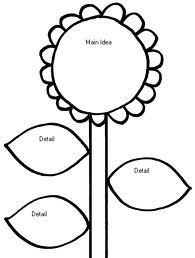
Summertime is a great time for your children to launch or practice their skills as writers. Grab a journal and help them keep track of things that you do, places you go, special times. Whether your children sketch a bit, dictate thoughts or even write a few words, the process of brainstorming and writing about their experiences and feelings will help them develop skills needed to become writers. Using simple graphic organizers is a great way to gather ideas and your children will enjoy deciding on things to include.


Start out by letting them choose or personalize a journal or writing notebook. Maybe they'd like to put some photos on the cover or cut some big words or pictures out of magazines. Encourage them to express what they feel. Try to make sure that there is time set aside for journaling on a regular basis to get in the habit of recording those thoughts.

Don't focus on the mechanics so much in the beginning ... just get some ideas on paper. Once you've captured some initial ideas, you might go back and add to the writing, through interviewing your child or rereading and asking, "What else did you want to say?" or "Why was that important to you?" You can always go back later to choose things to work on together, through revising and editing.

"YOU are a writer!!" Say this often to your children and they will indeed become writers! Getting those ideas is a big part of the process - the rest will come in time!

Have fun!


Tuesday, June 18, 2013

Early Learning: Summer Skills

Keep your child's skills up over the summer with some simple, everyday activities!

Play! Set up some unstructured play time for your children, when they can interact with others and create, collaborate, and converse. Open-ended play works well to allow children to discover new uses for things and lets them learn to play with others. Genuine conversation will help your child develop and practice language and social skills.

Explore! Find a new park, examine the details on your usual walks, try a new route when you're going somewhere ... All these will open up your child's world a little, without breaking the bank. If you can get in a day trip or two, find child-centered, child-friendly spots to visit. Zoos, farms, playgrounds, music and art events will all give your child new experiences to draw from.

Move! Singing and dancing your way through the day will help your child remember all sorts of things. Pairing facts with music has been shown to help memory ... sing songs about the weather, the days of the week, counting songs, ABC songs! There are so many out there! Some of my favorites come from www.drjean.org.

Count! Count everything you see. Use one-to-one correspondence when you count, assigning numbers to each item. Encourage your child to do as you model. Count forward and backward ... count steps, cookies, Legos - add them up and then take some away. Make it fun and have your child make up number stories, too!

Read! Read aloud, listen to reading, talk about reading ... In short, make reading a daily event! Your child will benefit from reading all sorts of books with you. Picture books, fiction stories, non-fiction informational texts ... Whatever catches their eye! Pair a fiction book about their favorite animals, bugs or dinosaurs with a vivid pictorial non-fiction book and have them discover and talk about the differences. You will be amazed at the discussions you can have, even with little ones.

Have fun!!

Friday, June 7, 2013

Poetry Fun!

Introducing poetry to younger children may seem ambitious ... but it can be so much fun! They love to hear poetry in songs and fingerplays - so why not try writing some! And ... it doesn't have to rhyme!

Encourage your child to choose a topic that they have strong feelings or memories about - maybe a favorite person, place or object. Then, have your child dictate words about that topic to make a moveable "poetry pile" of word cards. You can help the process along with some questions like, "How do you feel when you're with ...?" and "What do you love most about it/her/him?" "Close your eyes and describe ... to me" works well, too! We chose "cupcakes" and had fun listing some yummy attributes ...


Once you have the cards written, explore them and repeat the words, noticing the beginning of each one and looking for familiar letters. Have your child try to repeat a few back to you :) Next, let your child play with different arrangements, moving the cards around until they come up with the arrangement that sounds best to their ears ... like a song!

It's also fun to arrange the words in the shape of the object when writing them down or to write them around in a circle and leave space in the middle for a picture to be drawn. I think we'll try writing our Cupcake Poem in the round and make a delicious picture for the center!

You can choose who will be writing the words of the finished poem - copying from the cards might be exciting for your little ones, if they're able! Most of all, be creative - and, have fun!

Monday, November 5, 2012

Make a Thankful Book


Make a "Thankful" book, just in time for Thanksgiving!

Choose whether you want it to be a book of "Things" or a book of "People," then get started with an easy template of "I am thankful for ..." pages. 


If you decide on an "I am Thankful for People" book, help your child come up with a list of important people, like friends, cousins, grandparents, etc. Then, your child can take, find or draw pictures to assemble into a little book. Don't forget to complete it with labels or captions about each picture.

To make a "Thankful" book of Things, use the same idea, generate a list and add pictures ... I'll bet some favorite toys, pastimes and special things would make a nice book that your child would love to "read" again and again!

A book of their own will be a great resource for your child who is just starting to ask about names of important people in his/her life or how to write something like "legos," "animals" or "books." Use it as a resource for learning the spelling of loved ones' names and as a writing tool for early writers.

Super simple and super fun!

Have fun - and, be thankful!

Wednesday, October 12, 2011

Make A House to Teach Addresses and Phone Numbers

While you are going over Fire Safety this month, be sure to check for knowledge of addresses and phone numbers. It's a safety lesson that is sure to come in handy sometime!

Try this: take a small paper lunch bag, fold the top(where it opens) into a triangle and secure with a staple or glue. Fold the bottom up so it now resembles a house shape and draw a roof line.


Have children decorate with doors, windows, etc. - they can get very imaginative with some markers! Flowers, trees and all kinds of decorative features can be added - they might even want to draw themselves in the windows!

Then, on the inside of the fold, attach an index card programmed with their home address and phone number. Use this for a little memory game - check the information, close the flap, have your child try to recall ... practice the number of the house, the phone number, the street name ... until your child can repeat it back to you.

Then, if they should ever have to give an address or tell their phone number for safety reasons, they will be prepared :)

Be safe - and have fun!

Saturday, September 10, 2011

Name Games

At the beginning of each school year, getting to know your students is always fun ...  now add some digital photos to help them get to know each other!

Even before your younger learners can read names, they can begin to recognize photos and start associating them with the letters of the names connected to them!

Start your new school year off with a quick close-up of each student (get permission from parents!) and use it to label various things in your classroom. A check-in board is a likely first place ... and a helper chart! Attach a photo to placecards before laminating and you'll have your students sorted out in no time! Friends will be excited about identifying each others' names and helping them find their seats :)

Later on, set up a box of letter tiles (available at office/teacher stores or use old Scrabble tiles) and namecards with photos. Children will enjoy figuring out which letters make up each others' names. Use this to launch a center which later can graduate to include basic sight words and vocabulary, also using photos or illustrations - it will be a big hit!

You will find lots of other uses for these photos through the school year - have fun with it!

At the end of the year, take another photo and pair them in a project to show how much growing has taken place!

Monday, August 1, 2011

Character Book Bags

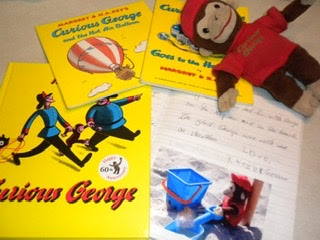
Plush toys that represent characters from books that kids love are so much fun! Curious George, Clifford, Franklin, Madeline, Babar and Mouse (from the Mouse and the Cookie books) are all currently in my collection, to name just a few! Children love to hold them as we read books - it makes reading personal and gives them a tactile connection to the story!


Here's a fun idea that I've done in the past - maybe your kids would like to try it, too! Choose a character that is a favorite with your children and gather up some of the stories that go with that character. Begin a notebook that records the character's adventures while he is "visiting" your house - it might say "Curious George came for a visit today and we decided to make it a beach day! We packed up all of our beach toys and headed off - George made sure to buckle his seatbelt in the car ...." (Have the story dictated by your child  and make sure to read some books that go along with your character, for background.)

Then, when your visit is done, pack it all up - character, notebook and books - in some kind of bag, suitcase or backpack and pass them along to a friend. Have your character spend a night or two with a few different friends, following the same process, and eventually come back to see you again - you'll have fun reading all about his adventures!


Some friends might like to include photos of his adventures - my "Curious George" visited zoos, stores, beaches, the firehouse ... he was strapped into carseats, strollers and tucked in at night ... the opportunities are endless for traveling about! Use your imaginations!

Other friends might like to draw a picture and illustrate the "adventures" of whatever character you choose to travel around. Get some cutting and gluing practice in if you're adding something to the travel notebook and you might attempt a few letters or words of your own story, if you're able! You and your friends will be the authors of a fascinating travel book when you're all done - then, do it again!

Have fun!

Tuesday, July 19, 2011

Simple Travel Games

If you have a car trip ahead of you this summer (or any time!), check out these simple travel game ideas!

To get started you will need:

Plastic Sheet Protectors (I Love These!!)
A clipboard (kids love clipboards!)
Dry-Erase Markers


To play the Traffic Sign Find Game, find Clip-Art of different traffic signs that you might see on your travels - make them up into a page and make as many copies as you want. Insert in a plastic sheet, attach to a clipboard and, as each new sign is sighted, the player will check it off with a big X!! It keeps them busy and helps with visual discrimination. You can sneak in a little math by counting how many signs found? how many left to find? and by discussing shapes and colors! When you've found them all, just erase with a swipe of napkin or tissue and start again!


Use the same format for the Letter Find Game!! Make up a sheet of letters - you can make them all upper-case for beginners or change up the cases and fonts if your children are a little older - and follow the same procedure! Check road signs, store signs, even signs on trucks, etc. ... some letters are REALLY hard to find!!


A blank piece of white copy paper inside a sheet protector can also serve as a write and wipe board for practice of letters, numbers, names - or for drawing on!! Your children will come up with all kinds of uses!!

Have fun!

Friday, July 1, 2011

Summer Fun!

Surfing around the "blogosphere" is a great way to come up with some new ideas - and some motivation! When the summertime first begins, it's easy to forget about deadlines and timetables and just kick back ... but then, sometime down the road into summer, I always regret the time and opportunities missed for some learning fun!

This year, I decided to start a running list of fun things to do that would keep a child's skills active ... here's what I have so far: (and I "borrowed" extensively from other blogs, but didn't keep track :( - if one of these ideas is mentioned in your blog, or you have an idea to add, please add a link in comments with your URL! Thanks!)

1. Write the story of yourself ... with illustrations! Staple together some computer paper and make a cover - then fill in the pages with your OWN biography ... start with you as a baby and add in some of your big milestones - use photos or drawings and some labels or sentences (written or dictated!) - it will be a KEEPER!

2. Make some mail and send it - a card for a far-away cousin or someone having a special birthday! Draw, cut, glue - make it interesting! In fact, you could get some cards done now for future birthdays and set them aside for mailing later :)

3. Design a new project or toy - save your recycling for a few days and brainstorm what sort of art project you want to do - maybe you will use different objects to print-paint or use some craft glue to assemble something really awesome!

4. Make a summer dessert - ask a grown-up to help you measure, cut and mix things to make something tasty to eat! Dividing up some graham crackers and chocolate bars for S'mores could be math practice!! Work in some counting and some planning skills!

5. Read a book - with a friend! Find a buddy and get two copies of a book - try the library or trade with a neighbor - then read and get together to discuss. You could ask each other questions or just share your favorite part!

6. Make a map of your neighborhood - use some markers and pictures or magazine cut-outs and plan out the roads and buildings in your area ... use symbols, shapes, lines, etc. to make it cool!

7. Take a container and find all the loose change in your house - put it all together and then COUNT it all up - divide it into different coin piles, make patterns with the coins, towers of coins - and then figure out what to do with it all!

8. Make a collage of all things you LOVE - take some magazines and look through for foods, toys, colors, activites, etc. and take time cutting and gluing them all on a piece of paper or cardboard!

9. Read a book about something NEW - go to the library or bookstore and look for something you haven't read about - nature stories, space, people from sports or history or maybe a different culture - fiction or non-fiction!

10. Make your OWN list of fun things to do - check your newspaper and local websites - use your imagination and HAVE FUN!