Showing posts with label dramatic play. Show all posts

Wednesday, January 27, 2021

Creating Fun During Lockdown

The spring of 2020 was long and the summer and fall kept it going ... by this winter, anyone who has been cooped up with their kiddos is looking for some new ideas :) 

We’ve had a lot of success with cardboard boxes over here ... they have made everything from puppet theaters to step-in wearable race cars to furniture for stuffed animals. And, thanks to Amazon, there are SO many boxes around!

It helped to put together a cart of accessible “art” stuff. There is an organizer of crayons and colored pencils, all kinds of scrap paper, and some recyclables. Included is a few card games, some letter tiles and wipe-off boards. 

We’ve added glue, glue sticks, kid scissors and rulers as time has gone on - and scotch tape, which is very popular with our kiddos. The idea is to offer access to some materials which are always “open” for autonomy in creative play. 

When you’re looking for more ideas, let your children lead you. They may want to try to do something new ... last week, we tried some wood working in the workshop - just simple sanding and drilling - and sewing with bright threads and big needles, no plan in mind. Cooking or baking is always a hit with the kids here, too. You can search the internet or Pinterest for just about anything :) There are so many ideas out there for easy, inexpensive fun. 

Pair an activity to a book for extra fun - even books you don’t have in the house :) YouTube has LOTS of books read aloud, when you’re not comfortable going to a book store or library, and your budget is groaning from adapting to life at home. Follow your child’s interests and become experts on dinosaurs or planets ... 

To get you started, here’s some “Camp” activity ideas from my blog ~ tweak these themes to make them “COVID Camp” themes, instead of “Summer Camp” ... pick one and make a day or weekend out of it :) 


Camping Theme:   https://makeearlylearningfun.blogspot.com/2011/07/camp-out.html

Thursday, October 29, 2020

Playing Restaurant: Social Skills and Language Building

There is no better vehicle for developing language and social skills than an authentic play experience. Children love to act out familiar scenes, take on roles that are interesting to them, and interact in pretend play scenarios. Playing “restaurant” or “diner” or even just at-home eating can be a great time to practice those skills with little or no adult intervention. For those with little or no dining-out experience, this is also a way to gain knowledge of an unknown situation. 

You don’t need a lot to get started :) A simple play set is great, but you can also work with cast-off kitchen pieces and recycled containers - your kiddos will take over whatever you make available. Just make sure they’re clean and unbreakable, for safety reasons. 

If you have access to a pretend play kitchen area, your students can work with that, but a simple disposable plastic tub, turned over with Sharpie details was embraced by our friends as a cooktop :) 

This post - Make Your Own Toys!  - is all about making your own set from things you have at home :) Kiddos will work with whatever they find ... and a healthy dose of imagination! 


For “dining out,” don’t forget an order pad for students to role play and take down all their customers’ food orders!  Small friends may draw or make little marks, while older kiddos will get excited to try out their spelling tricks! 

Making a menu board or some menus might be another fun writing exercise. Invented spelling and drawn pictures, or illustrations cut from magazines, will complete this task :) 

Social skills such as taking turns and sharing supplies will get lots of practice, as different roles are taken on. Push in to work on specific vocabulary and language skills with those who would benefit from intervention, but sit back to observe the natural conversations that may emerge. 

Have fun!! 


Thursday, September 10, 2020

Playing Store: Consumers and Producers

Playing store can be a great play experience for your kiddos, but why not really make it meaningful?

With a little help, your children can participate in PBL (project based learning) by creating their own products, "pricing" them, and "selling" them.  It sounds complicated, but it truly is not :) 

As an example, one small crew made bead bracelets and duct tape bookmarks, as part of an open-ended craft activity. (Great fine motor work, BTW!) Some were very elaborate, therefore more "expensive." The artists and artisans were the "producers." When they had a bunch of “products” finished, they laid them out and examined them, counted up the sale items, and came up with a pricing system. They kept it simple with $1, $2, and $3 items, but this could be adjusted if you wanted to make change or work with harder numbers.

All items were then priced and the kiddos turned our dramatic play area into a store display area. They arranged their goods, and some friends made signs to show "consumers" where to shop. They all discussed how much each item should cost, and tagged items with sticky notes.


For the consumer side, children then took turns being shopkeepers and customers. This required a little adult intervention, to model being the paymaster, and to sort out roles. Shopkeepers could earn "Kid Cash" while working and then save it up to go shopping with later on. A few customers were given some cash on loan, to get the process started. Customers with no cash yet had to window shop, plan, and wait until they made some money to spend. All roles revolved, so all students got a chance to be producers, shopkeepers, and customers.

When it was time to be a customer (or consumer), each child had to budget their teacher-issued “Kid Cash” in order to purchase what they wanted. Decisions had to be made about items that were too pricey, or not within the budget, and the dollars had to be stretched to stay within budgets. 

On the sales side, adjustments were made to prices if items weren’t moving well and small groups of students spontaneously got together to make those judgements. It was awesome to watch them start to take ownership of the store :)

Throughout the process, lessons were learned, the children could tell about the process that we “studied” :) 

AND we had so much fun!

* This lesson was done pre-COVID-19. Adaptations could include quarantining supplies for a few days in between segments and setting up a store play center using precautions seen in actual stores (such as clear partitions and hand sanitizer stations), “normalizing” these scenes for students. This would allow for some play interchange, while maintaining distance and safety precautions. 

Saturday, July 18, 2020

Q-Camp: Plans for Tired Parents :)

This 2020 is an unusual year! You may be running out of ideas to keep your kiddos busy and engaged, which BTW is always ok - because children do their best work when it is born out of a quest for SOMETHING TO DO!!

But still, it's already been a long spr-ummer already, right?!? So, kids being kids ... they (and you!)  are still looking for stuff to do :)

I've tried to group some old posts together to make it easier to do a week's worth of fun and interesting activities with, hopefully, the kiddos doing most of the "work"! 

Day 1: Click here for some tips on fun Outdoor Play - using what you have to build and play on an obstacle course will get your child's creative juices working and have them think about everyday objects in new ways ... and it's great exercise! They can redo it again and again, practicing good social skills (if they have a partner) and design skills. Of course, some supervision is needed to ensure safety :) Don't pass up everyday opportunities for sidewalk curb balancing and hill rolling :)


Day 2: Let your kiddos experience Math concepts in a whole new way - Math with Water Play - great for a warm, dry day :) Let your kiddos collect an assortment of "tools" from around the house and see what happens. Maybe with a little starter exercise, they will take the play in new directions :)


Day 3: A little reading goes a long way, depending on your book choice. Reading to cool off is great for any day - rain or shine! You can cozy up for some great illustrations, and fun, silly words, but be ready to have your kiddos act out the shakey-shakey part :) Acting out and retelling stories are a great tool for comprehension, so play away!


Day 4: Mail Call! Use those rainy or too-hot days to craft some mail for relatives. Great way to reach out in these isolated times :) and children of all ages an abilities can participate! Younger friends can draw a picture and olders can write as best as they are able. These cards and letters are sure to be treasured and - maybe, just maybe, they'll write back!!


Day 5: Ocean Animals are always fun! Check out these simple craft ideas and great reading options - you can usually find titles on YouTube if you don't have access otherwise :) Pairing crafts with stories extends the literature and helps to solidify the story for young readers :)


Have fun!! 


Sunday, February 28, 2016

Making Friends: Interview Chat

Little ones don't always know how to start making friends ... or conversation. Give them an assist with a brand new microphone for "interviewing" - home made or dollar store bought :) If you're going with home-made, invent your own from recycled materials around your home. We used a cardboard roll, some silver foil, and stickers.

If you're not looking to DIY, check around at the dollar stores to find one that is durable - I have a toy microphone that is all plastic, non-electronic, and echoes your voice, mimicking a real microphone for a fraction of the cost.

Now, help your child come up with some practice questions, such as "What's your favorite toy? What movies do you like? Do you have a favorite animal or pet?" Ask your child what they would like to know about a friend and practice setting up questions.

Model this behavior with your child by playing an "interview" game to help them know how it works, to prepare for when they are ready to try it themselves. Then, next time you are in a social situation with some other little ones, set them free to make new friends and find out all about them.

Have fun!

Friday, February 26, 2016

Fairy Tales: Jack and the Beanstalk

Jack and the Beanstalk is a favorite story with the little guys ... it has everything - magic, a giant bad guy, a castle - all their favorites in one fairy tale!

Make a playset to act out the story, including a castle in the clouds and a tall, tall beanstalk! A file folder, opened top to bottom, makes a great tall backdrop to situate your scenery on. Your children can set their castles near the top and make sure they add some cotton ball clouds. Next, have them use markers, chenille sticks, paper, or whatever you have around to make the tall, tall beanstalk that grew from the magic beans. Then, draw or color some characters and they will have their own "stage" to act out or retell the story.

Be sure to start out with "Once upon a time," and "far, far away" ... fairy tales help little ones sort out good and bad, and develop some sense of resolution, especially when the ending is "happily ever after."

Before reading the story, check for any background your audience has with this story or similar fairy tales.

Then, begin to relate the story in the style of an old-time storyteller, without the book ... just to spark their interest and get their attention.

Next, pull out the book, and launch into the story, pausing to have them participate physically whenever possible ... tossing beans, climbing up the stalk, peeking under the giant's door. They will love the movement, and it will help to imprint the story on their brains :)

When you're all finished, look for some short video clips - there are some great animated short clips of all the popular fairy tales - and compare and contrast with the story you read aloud! Your little ones will amaze you with their attention to detail :)

For more extension activities...
  • plant some bean seeds ... use either dirt or get really magical with seeds sealed up with damp paper towels in ziplocs and hung in the window - roots and sprouts to come!
  • sort all sorts of dry beans and count, pattern, etc. for math
  • have friends draw pictures for each of the story parts, or the giant's special things, and practice sequencing 
  • photograph your little ones in climbing poses, cut them out, and help them fashion a paper beanstalk to "climb" - they will get a big kick out it! 
Have fun!

Thursday, February 25, 2016

Fairy Tales: The Three Little Pigs

Once upon a time, we read "The Three Little Pigs." The best way to remember a story, or anything at all, is to immerse yourself in it. So, read it, watch a video clip of it, act it out, make crafts, etc. When reading "The Three Little Pigs," give your kiddos some materials and let them make one (or more!) of the pigs' houses from the fairy tale.

Work on scissor skills by having little ones cut strips of red paper for bricks to build the brick house. They will need something to glue them onto ... so search around for some cardboard or a small container of some sort to act as the structure. We used cardboard food containers, like those for Chinese food, sold in multiple packages at craft stores, and they worked great!!

If your crew is up for it, you can keep going, like we did, and make a whole RETELLING KIT!! One house was not enough for us, and we did have a whole container to fill, so we cut up some small cardboard house shapes and thought about what to decorate them with. We let our little friends add straw (yarn) and sticks (cut up lunch bags) to complete their set of three houses. (Thanks for the great ideas, Amy!!) Both  houses are now stored in our brick house container!

When all the houses are complete, add three little pigs and a wolf. We made ours from paper, but you can do it any way you want. Clay, small animal figures, counters, etc. would all be interesting and fun. Practice retelling the story using all your new props, and talk about the characters as you go along! 

When you're reading the story together, make sure you include some little actors from your group - all they have to master is the repeating lines "Little Pig, little pig, let me in" and "Not by the hair of your chinny-chin-chin!" Of course, "I'll huff and I'll puff, and I'll blow your house down!" is a pivotal line, as well!

Have fun with the story and make sure you end with ... and they lived happily ever after (the pigs that is...)!

Looking for other play ideas to go along with the theme? Try adding sticks, yarn, chenille sticks, and small building blocks to a playdough table to build the pigs' houses - or just play!  

Have fun!


Monday, July 23, 2012

Summer Olympics Fun!


There are so many fun ideas to play with that are Olympics-related and that will inspire excitement in your children!!

Start with checking out all the internet action already going on to get them aquainted with what sports and athletes they might be interested in. Check out the live feed from www.nbcolympics.com or get lots of info at www.olympic.org ! Google "Olympics" for more sites ...

Then ... do some training and competition! It is so important for children to have lots of exercise and physical movement - get out there and make it happen! It's easy to put together a simple program of activities using items you may already have around the house or classroom.

See what you can come up with ... when we did the Winter Olympics, we set up a card for each  "competitor," with different stations for "events" like sock skating and olympic ring toss (hula hoops and bean bags!). If you do a few games or exercises each day, you can stretch it out over a few days or a week - culminating in a Closing Ceremony of your choice!

Crafts can be simple:

For olympic rings, you'll need paper, paint (representing each of the five colors) and small paper cups! Hold the cups upside down, dip in paint and print circles galore!


For a related art project, make Olympic torches! Trace children's hands on flame-colored tissue paper - red, orange, yellow - one set of each if you can! Wrap a paper roll with black paper or have them paint them black and then attach the hands to the top - now you have Olympic torches!


Make some hand-made medals together, going over the five colors of the rings - every country participating, at the time the logo was developed, had at least one of these colors in its flag! The five rings represent the five continents (North and South America were considered together at the time, Europe, Africa, Asia and "Oceania") of the world - and the fact that they are all joined together for "unity" - kids understand that concept!


I like to finish off with individual photos of my Olympic athletes, standing in front of a flag, wearing their hard-earned medals - and huge smiles! They make a great keepsake - and, who knows, maybe it will be part of their own Olympic profile someday! :)

(Parts of this post are adapted from previous posts on the Olympics - I wanted to get it all together :)

Have fun!!

Monday, August 1, 2011

Character Book Bags

Plush toys that represent characters from books that kids love are so much fun! Curious George, Clifford, Franklin, Madeline, Babar and Mouse (from the Mouse and the Cookie books) are all currently in my collection, to name just a few! Children love to hold them as we read books - it makes reading personal and gives them a tactile connection to the story!


Here's a fun idea that I've done in the past - maybe your kids would like to try it, too! Choose a character that is a favorite with your children and gather up some of the stories that go with that character. Begin a notebook that records the character's adventures while he is "visiting" your house - it might say "Curious George came for a visit today and we decided to make it a beach day! We packed up all of our beach toys and headed off - George made sure to buckle his seatbelt in the car ...." (Have the story dictated by your child  and make sure to read some books that go along with your character, for background.)

Then, when your visit is done, pack it all up - character, notebook and books - in some kind of bag, suitcase or backpack and pass them along to a friend. Have your character spend a night or two with a few different friends, following the same process, and eventually come back to see you again - you'll have fun reading all about his adventures!


Some friends might like to include photos of his adventures - my "Curious George" visited zoos, stores, beaches, the firehouse ... he was strapped into carseats, strollers and tucked in at night ... the opportunities are endless for traveling about! Use your imaginations!

Other friends might like to draw a picture and illustrate the "adventures" of whatever character you choose to travel around. Get some cutting and gluing practice in if you're adding something to the travel notebook and you might attempt a few letters or words of your own story, if you're able! You and your friends will be the authors of a fascinating travel book when you're all done - then, do it again!

Have fun!

Wednesday, July 13, 2011

Summer Camp: Pirate Play!

Playing Pirates is always a BIG hit - with boys and girls! Gather some props to make a pretend pirate ship - a large box to decorate would be great, but just arranging some chairs together and tying on some black streamers or fabric to connect them will give your children a place to gather! Add a paper-plate ship's wheel  and they will be set to go!

Get in a bit of geography by having a globe on hand and spinning it to choose where you are setting sail for. Have the children find "home" on the globe as well! If there's no globe available, a large map will do :)

Every pirate needs a spyglass, so each child should start out with a paper towel tube and decorate accordingly - use markers or stickers to make them really cool! There are lots of clip-art pieces on Google images to try out - pick a few and assemble!

If you have any eyepatches lying around, or other pirate regalia, put them out in a dress-up bin - try some all-purpose vests turned inside out and some old shirts cut with ragged edges to make pirate gear! A sash cut from red and white striped fabric or an old scarf pulls the whole look together!


For more crafts, supply a key with simple mapping symbols and paper and markers for the children to make some maps - don't forget a big X to mark the spot where the treasure is!  If you're looking for more fine motor practice, you can find free pirate coloring sheets at several sites on the internet, as well!

Before all the fun begins, come up with a "treasure" to be split between the pirates - beaded necklaces from the party store and "gold" coins work well - and hide it all in a special container somewhere. Then, devise some clues that will guide the group from place to place, each time to find the next clue until the end of the hunt! Here are some to get you started:


Treasure Hunt!
Cut these clues apart and hide them as directed – or make up your own!


Under the fence where the squirrels run                        (have this ready to start the action!)
Look for clue #1!


Find a toy that’s the color blue – that’s                                   (hide this under a fence!)
Where you’ll find clue #2


Look around the base of the big tree                                       (hide this under or near a blue toy!)
If you’re looking for clue #3


Beside a window or a door,                                                  (hide at the base of a tree!)
You will find Clue #4


Look under a rock or two                                                     (hide beside a window or door)
To find the fifth and final clue!


This clue will send you around the lot                                         (hide under a rock)
Until you find where X marks the spot!

 (attach a rolled up REAL treasure map to the last clue -  ready to point out where you’ve hidden your “treasure"!)
 

If your treasure includes some gold coins, get in a little fun "arrrr"ithmetic - counting and adding up sums!

For snacks, try some "treasure" goldfish crackers in silver cupcake papers or some pretzel logs and fruit roll-ups cut up to form into a pirate ship - fun!

Books to read with your little pirates:
"Shiver Me Letters: A Pirate ABC" by June Sobel
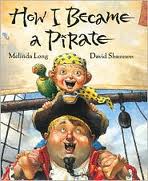
"How I Became A Pirate" by Melinda Long
"The Night Pirates" by Peter Harris
"Tough Boris" by Mem Fox
"Grandma and the Pirates" by Phoebe Gilman
"What's Inside a Pirate Ship"

Have a great time!

Monday, July 11, 2011

Summer Camp: Knights and Ladies of the Castle!

Get ready for this week's camp idea by assembling a few arts and crafts supplies: some cardboard, markers or paint, some craft foam and writing materials.

Set up some props to center your activity, either outdoors or indoors. Mark this area by hanging some sheer fabric or paper streamers or use my idea - take a 10' by 10' outdoor tent canopy (borrow one if you can) and only raise it up to half-height. This makes a perfect castle area for pretend play, after you hang a few decorative flags and some streamers! You might want to designate one or two special chairs as thrones and have some space for craft assembly and "fine dining."

Of course, dressing up is always fun - see what you have in the way of royal garb and add fabric or towel cloaks, if needed. Jewels, such as party-store rings and beads of all colors go over well, also :)

For crafts, start with a crown or tiara for your young royals. Every prince or princess, knight or lady likes a crown! Use light cardboard or craft foam to prepare some crown shapes beforehand (or order from a catalog supply) and then make available some glittery baubles and colored foam pieces to make them sparkle. It's always interesting to see who will make theirs a repeating pattern and who will go for "more is more!"


Making a shield with your personal crest is next on the fun craft list! Cut some small shields out of cardboard with long rectangular strips to be mounted on the  back for holding. Decorate as you wish with your favorite things - symbols, initials, cut-outs, stickers, whatever you want! Stripes of different colors or contrasting colored tapes could also be fun! When you have it just the way you want, turn it over and attach your handle - now you're ready for anything!


When you're ready for another activity, story-telling is an old favorite "at court." If you want to use props, you could use paper cut-outs, or copies from your favorite stories (mount them on a craft sticks for puppets) or maybe you have a set of finger puppets lying around - I've had these for a long time (IKEA has great little finger puppets!).

Lastly, write your own fairy tale!  Draw or copy some pictures and have your children dictate a beginning, middle and end of a story - make sure there's some action (maybe a witch or a dragon!) and a happy ending ... and dress it all up with a special cover - it will become a new favorite!

When it's time for snacks, serve your royals on a silver platter - maybe some fancy cheese and crackers and a bowl of fruit - with lovely napkins and a special cold drink! Have fun!

Thursday, July 7, 2011

Summer Camp: Pretend Camping!

When the summer starts to get "old" for your kids, here's a do-it-yourself fun idea: hold your own summer camp days, right at home!

All you need is a little pre-planning and some imagination - start now, while the fun is still fresh and plan ahead for later in the summer!

In the past, I've held camp during August (basically crafts, games, stories and snacks!) - parents and children were looking for things to do by that time of the summer! Plan a morning full of activities - you could even switch off with another parent or two to free up some me-time!! It's always more fun with a few:)

I'll start you off  with ideas for a theme that worked well for me - and follow up with more themes in more posts - so, check back!

Camp-In Day

Set up a small tent outdoors (or indoors!) and gather up some quilts and cushions. Make sure you have the fixings for a pretend camp-fire - I found a little aluminum baking pan that we adorned with yellow, orange and red tissue paper flames - some rocks or wooden blocks placed in a circle with some sticks in the middle would do nicely, too!


Meet around the "campfire" to get started - talk about camping and outdoor fun - then go on a little "hike" through your yard, neighborhood or a near-by park. Have a small plastic container along for a sensory tub to be filled with rocks, pinecones, leaves, small sticks, etc.

When you are finished, have a basket of books related to camping available :)  There is a Berenstain Bears book - "Go To Camp" and a great Kevin Henkes story "Bailey Goes Camping" to get you started! While some are checking out books, have the other children rotate through different activities, just like in school, so each child gets to try everything!

For crafts, have available some TP rolls to make into binoculars for viewing nature. Use paint or markers to color or have stickers available to decorate. At another spot, have some sturdy paper and glue to turn your nature finds into a cool art collage! Get a little letter/sound practice in by trying to label the found items! For pretend play, gather some plastic plates and picnic items and they will do the rest!

For a snack, try some trail mix (cereal mixed with raisins and nuts, if permitted) OR assemble your own kid-s'mores, using graham crackers with layers of chocolate cake frosting and marshmallow cream spread on top! Have water or juice available to stay hydrated!

Knowing how kids love "souvenirs," you could also find some tiny compasses and bandannas at a party store or on-line catalog! When you're ready, you can close the "camp" by singing some favorite songs around the fire! Have fun!

Monday, June 13, 2011

Pretend Play: Dinosaur Lab

I love a great Pretend Play Center - change your kitchen/housekeeping area up every so often to keep the fun fresh and to stimulate more verbal interaction between the children! I've seen/done Kitchen, Hospital, Doctor's Office, Vet's Office, Pizza Parlor, Bakery ... but here's one I just saw a few weeks ago:

Pretend Center: Archaeologist/Paleontologist's Lab

I stopped by my friends' classroom - Mimi and Merrie - and they had this fabulous center up and running - it was a great favorite with the kiddies!
Here's what I observed: A table covered in craft paper with textured stencils taped down to do dino-rubbings; Bones (dog chews) and paintbrushes in sand for finding and preparing for "study"; Fossils made from plaster-of-paris (could be play-doh or other modeling clay) for examining, and more modeling clay and small dinosaurs for creating "fossils".

There were many dinosaurs on display and props to get in the mood: "Lab Coats" made from old adult-sized white shirts, with labels; Magnifying glasses and plastic lab/safety glasses; Charts and dioramas identifying all different dinosaurs, with pictures and labels.
Books in the library were also theme-driven! Include some great dino-books in yours - there is an Usborne Book of Dinosuars and a few younger non-fiction books by the Berenstains "The Day of the Dinosaur" and "The Biggest Dinosaurs" in my collection - and of course, some wonderful fiction books, like Jane Yolen's "How Do Dinosaurs Say Good Night?"

In this dino-center, there was much exploration going on - lots of questions asked and answered, lots of engaging pretend play! And, as always, along with the play ... tactile exercise, verbal exchanges, matching, sorting ... all sorts of learning was taking place! Thanks for the inspiration, teachers!

Monday, May 23, 2011

Nursery Rhymes for Fun!

Nursery Rhymes have been around for generations, and are still valuable for so many reasons! Repeating familiar words, with the rhythm associated with these poems, introduces and reinforces identification of rhyming words, good listening, beginning and repeating sounds, new vocabulary - all sorts of literacy skills!

See if you can recall one or two, then model for your children how a writer writes down the words. You can do this seated at a table, with paper and pencil, by acting it out and helping your children realize the process of beginning to write. Invite your child to join you, gather the tools you need, and practice sitting properly and gripping your pencil. Then, talk through thinking of the words, sounding them out and writing them down. "How do I start? Let's see ...  'Little Miss Muffett...' I hear an L at the beginning..."

Your children may join in the "game" at any time, so make sure you have more supplies on hand! Have a book or two on hand to refer to - there are many collections out there - and have fun with it!

When you want to "play" with the rhymes, make some props!!

Make a Spider: Find a large button with four holes for attaching to fabric. Instead of attaching to something, take two chenille sticks (pipe cleaners) and cut them in half. Push the pipe cleaners through two of the holes each, so that all the ends are dangling on the same side. This will be the bottom of your spider, so flip it over to the other side and attach two googly eyes, and, you have a SPIDER!! Use it with "Little Miss Muffett" and other spider poems!

Web Construction: Draw a web on construction paper and have your child try to "match" it by dipping lengths of yarn in white glue and laying it on top of the lines you have drawn. This is definitely messy fun, but great practice for those little hands! Now, you have someplace for your spider to hang out :)

Paper Garden: Make a scrap paper garden, cutting or tearing paper for stems and leaves. Add cupcake-paper flowers to illustrate "Mary, Mary"!

Act it out: Think of some other rhymes and act them out - practice safe tumbling to "Jack and Jill," fall (safely) off a chair for "Humpty Dumpty," walk in a garden for "Mary, Mary Quite Contrary," etc.

Adding an action or art extension to anything makes it easier for the children to recall!

Have fun!

Monday, May 16, 2011

Make Your Own Toys!

Play is about creating, imagining, sharing ... and anyone can do it! The ability to "invent" is one that is being pushed aside, as we find ourselves in toy aisles filled with every kind of already-made play props. There is a place for all these toys, but a need for imaginative approaches to play, as well :)

We have to make sure that Invention, Problem-Solving, Creating - all great skills we look for in adults - are encouraged when children are developing!! Open-ended projects, where materials are gathered and new things are made, are great for helping to develop these skills. Start with one project, where everything is created from materials you already have and see the wheels start to turn. You might have to model and vocalize the thought process for making playthings, but the fun will catch on!


Take a basket of recycling, including plastics, paper, cardboard and boxes, and see what interesting things kids can make! It might be a challenge at first, to use their imaginations ... some will have a hard time pretending the shredded paper that you might use in pretend play is "spaghetti" or that cardboard boxes could be made into other toys, but as their imaginations kick in, magic might happen!

We found a simple cardboard box, some margarine tops, some silver foil and bottle tops - and look what we came up with!! Use whatever you have on hand, and, if you don't permanently attach things, you can change it up again! Our little kitchen comes apart and can travel to Grandma's or go on vacation with you!

Use YOUR imagination and see what you can come up with - maybe you have a train scene to make or a pet park or another appliance for your pretend play area!

Have fun!

Monday, May 9, 2011

Bug Party: Early Childhood Exploration!

Plan a "party" to celebrate and explore BUGS! Gather a few things together to make your children feel like explorers - we chose safari hats and bandannas from the party store, a simple bug collecting case (ours was from a craft store, but you could make one from a recyclable container) and a magnifying glass. Then, round up your bug-hunting crew (we did it for a small birthday party!) and get ready for an adventure. Plan on visiting a nearby park or garden, and plan your route with a rough map - map-makers welcome! (On our walk with a few three and four-year-olds, we decided to make a work-crew guidance device (!) using a length of rope and making a big knot for each child to hold onto - the leader held one end of the rope and a spotter took up the rear! We told them we all had to help carry the rope in case we needed it!)

Once you arrive at your destination, have an adult or child model for the other children how to move  rocks without hurting bugs, how to slow down and look carefully, and how to stay very still while "hunting" - then, set off on your own or in pairs, once a perimeter has been established! Cries of "check this out!" and "quick, look at this!" will ensue as everyone has fun finding a variety of insects.

Make sure to have a digital camera on hand to record some of your finds for review later! Have some books about bugs along to read or another activity for when you start to slow down ... we sat down and did some body art, coloring ants and ladybugs on forearms or cheeks with face-painting crayons.

Later, prepare some special treats with your "buggy" crowd:

Ants on a Log
Use sections of celery sticks, spread on cream cheese and add a row of raisins for ants. I've also seen this done with variations using pretzel logs, peanut butter and craisins :) Watch your food allergies!

Dirt Dessert
Mix together one large vanilla pudding mix and two cups of milk. Add 1/2 cup of powdered sugar and 8 oz. of softened cream cheese - mix until blended. Stir in 8 oz. of Cool-Whip type topping. If you do this with the kids, make sure to count and measure along the way - math!

In another bowl, combine 1 1/2 lb. package of crushed Oreo cookie crumbs and 1/2 stick of melted butter to look like dirt. Alternate layers in a cups or a bowl, ending with crumbs on top! Add some gummy worms for fun and refrigerate!

Yum!

Saturday, May 7, 2011

In the Kiddie Pool for Early Learning Fun!

An inflatable baby pool is a great tool to have on hand – I like to keep a small one around for all sorts of fun- no water necessary! A 3-ft diameter size is great for a small play center, while larger is better for a library or group “sit-in” set-up!


Swim into Reading
Fill your inflated pool with some comfy cushions – I’ve thrown in a few beach towels, too, that they can roll up or spread out. Add a stack, or a beach bag, of books, such as ocean and/or fish books!  Plan with your children how many can comfortably fit in and generate rules for use.  Chances are you’ll find lots of reading going on!

Sandy Beach
This is a great way to have some sand play, even if you don’t want or don’t have a whole sandbox set up! Fill partially with some sand – you don’t need a lot! – add some shovels and maybe some shells or plastic sand toys. Watch out for sharp edges that could puncture the pool or hurt a child. You can make it a “reach in to play” center or a “get in to play” center, depending on the size of the pool and your clean-up requirements .
Imagination Play Prop
Children are resourceful in planning out how to use props for imaginary play. A small pool might be an animal pen, a baby crib, a comfy bed, even – a pool! I’ve seen one used as a stage, a lake, a fish pond – even a Jacuzzi!
Fishing Hole
Make some fishing rods from sticks you find outdoors or from some dowels (easy to find at a hardware store). Attach a length of heavy string or yarn and add a magnet to the end.  Whatever you are fishing for should have a paper clip, or something metal attached to it, to make it “catchable”! You can catch fish, octopi, and whales made out of craft foam - great hand-eye coordination practice!
Fish for Learning
Take your fishing to another level and make letter cards, number cards, matching cards – and plan games around them! If you already have cards with magnets on them, just change the fishing pole, so it has a big metal clip – it works either way! Practice letter and number recognition, do simple addition when you catch two cards – the options are endless! Colors, shapes, sight words, beginning sounds … "Look, what letter did you catch? Hmmm, what sound does that make?..." or "Find and catch a yellow fish! Now catch a red fish!"
Games
Practice throwing/tossing into the pool to get some exercise and hone throwing skills – bean bags, beach balls or other small balls would be fun to try! Try from different distances with different things, see how things fall depending on their weight and distance – have your children guess and then experiment!
Have fun!

Monday, May 2, 2011

Go On A Bear Hunt!

It is always fun to read and get involved in a story with children - sometimes a favorite story is read over and over again! Remember stories where the children got so involved, they were chiming in on parts? While you are reading and re-reading, you can be sneaking in valuable literacy lessons, too, that just seem like good fun!

A favorite book to read and act out is "We're Going On A Bear Hunt!" by Michael Rosen, illustrated by Helen Oxenbury. In this book, there are lots of repeating lines, fun words and descriptive language - draw your child's attention to the sounds that each section of the "hunt" brings and encourage them to recall and order the events - great exercise for attention to detail!

Take a good look at the illustrations, alternating between black and white drawings and vivid color! For an animated version of the book, check YouTube - there are also other interesting videos, including the author acting out the story.

To act out the story yourselves, brainstorm with the children about the sounds that come up in the story ... and how you might recreate those sounds! Try to find things around the house that would make all the various sounds... "Hmmm, this part says "swishy, swashy".....what do we have that could make that sound?" Gather together some home-made sound effects or instruments that you could use to act out the story.

Make up simple symbols for the different scenes in the story and make posters to set on the floor and take a  walk - a grassy field, some mud, etc. - while acting out the story. Play "what-comes-next" and make sure you backtrack at the end!

For an art extension (and social studies!), make a map! Use simple symbols again or cut-outs to represent the areas that the family goes through and have the children lay it out in a map form! Use lines and arrows to show how the group should progress according to the story - maps are fun to make! Have a child describe the map to you and sequence the events of the story!

Have a good time reading!