Monday, October 19, 2020

Make Your Own Pumpkin Patch

It’s hard to make a plan these days for traditions like pumpkin picking! Just getting through each day is a lot, but if you’re thinking about it .... Some schools have arranged for farms to come by, some are doing virtual visits, some are coming up with other creative ideas! If your class is hybrid, it’s time-challenging to do anything together, but teachers are making it work, as best as they can :)

Having the whole class contribute to a project is one way to build community amongst the various sections of the class. In the past, when challenged by schedules or transportation/budget issues, we made our own pumpkin patch on the school property. This might work for this crazy year, too! 

Ask families and community members to contribute any item(s) they are able ... hay bales, corn stalks, scarecrow decorations, milk crates, clothing for a scarecrow, etc. They could drop it off in a specified area outdoors, so some may come before school, some after school, and some at drop off or pickup times. Put all the pieces together and let the children come up with a plan - and execute it. Since we had a few classes participating in ours, it was done bit by bit, which would work this year, if cohorts/remote is your model. 


Groups could also make a giant leaf pile and use it to stuff a scarecrow’s body, so he could sit-up :) Add a pumpkin or plastic jack-o-lantern for a head and think about a silly hat for your guy! Our kiddos had so much fun doing this, that we dumped him out and started over with the next group :) Why not even make more, if you get more clothes? 


Of course, our scarecrow needed a name, so that became another task ... coming up with and writing down suggestions, and reviewing them all to vote for our favorite! Spelling, writing, charting results ... all kinds of skills there! 

Our pumpkin patch became a place to read stories, observe nature, find natural treasures, and, ultimately, find a small pumpkin on Halloween. One class decided to supply their own, bringing a small pumpkin to share in the patch, while another class chipped in and got minis and painted them up as an activity after “picking” them outdoors. A hybrid class could pick a few with each cohort, and have remote learners stop by after hours for their own, then use markers or paints to decorate them all together, but apart :) 

Tip: Make sure that a volunteer only puts out the pumpkins as needed, so no friendly neighborhood critters grab them for snacks :) 

Have fun! 


Friday, October 16, 2020

We are Scientists: Pumpkin Exploration

There is nothing like hands-on experience for really learning and remembering about a topic. Pumpkins are a great subject for diving into and learning about in a multi-disciplinary way! 

Measuring is a fun way to start out .... try it with non-standard units of measure that you can compare to other objects. You can use something flexible like a rope or length of yarn to see how much it takes to go all the way around the pumpkin. You can also see how tall the pumpkin is this way, or use blocks or connecting cubes to get your answer. Hands on measuring and comparing are great math activities :) 

Talk about how your pumpkin grew and where it came from. Show photos of the stages of growth - from a seed to a sprout and changing colors - there are great non- fiction (and fiction) books that highlight this. You can find videos of pumpkins growing and even virtual pumpkin patch visits! 

Cut into your pumpkin for some slimy, hands-on fun next! I like to make a cut in the top and also cut out a “window” in the side, to make it easier to see in and reach in - the hole on the top offers more light.   


Lots of kiddos love to reach in and pull out all the pulp and seeds. Use as many of your five senses as possible - to see, smell, touch and maybe even taste seeds or pumpkin products. Run a hand around the outside and count up the ribs - or try guessing and counting as a fun predictive activity. For those with sensory differences, try for a little exposure at a time to the pulp in order to get them more comfortable with the squishy feeling. 


In-class learners can go back again and again to see and explore ...  remote learners may benefit from leaving a basket of baggies with pulp and seeds outside for them to pick up after school hours. Planning ahead can have all students on the same page with this activity. (If you’re up for it, watching it rot over a few days is also interesting.) 

Playing with sealed bags of “pumpkin guts” can be a fun counting activity - make sure there is pulp and seeds and have students mush around and count the numbers of seeds inside. 

Using a variety of gourds and small and large pumpkins can also be a fun sink or float activity. Introduce some other classroom items - maybe a pumpkin eraser, or some plastic scoops - and guess whether things will sink or float. Then, take turns testing out your theories. Your little scientists will love it! 

Have fun! 


Wednesday, October 14, 2020

Learning and Blending Sounds with Movement

When learning sounds or how to blend sounds to read, adding movement activities can help for increasing focus and solidifying the learning. 

There are lots of programs with motions that connect letters to sounds - if you have access to one or can find one on YouTube, it’s a great way to help your child(ren) make connections between sounds and letters. If not, consider making up one of your own!

As a next step, blending across your fingers (touch each one as you make a sound) or up/down your arm (chop each sound at a different point on your arm) are great ways to start with helping beginners understand the art of blending sounds together to make words.

Sometimes it helps to add objects and hand movements to understand blending. For CVC (consonant-vowel-consonant) words, grab three objects and touch each one as you say a sound - blending as you go. “B-A-T bat.” 

For even more movement, use some painters tape or sticky notes to make letter spots on the floor or go outdoors with some chalk. Make letter circles or squares to hop onto or into, to blend and make words. Think of a word, then jump from letter to letter to make it! Once you turn it into a game, and practice it, they will start to play it on their own. 

Keep it simple to start! Begin with one vowel and a few consonants within reach of each other and take turns building words. Kiddos love an example and then freedom to make their own choices. Even “nonsense words” can count - if the sounds are right! Give guidance as needed :) 

Have fun!

Sunday, October 11, 2020

Social Distancing with Small World Play

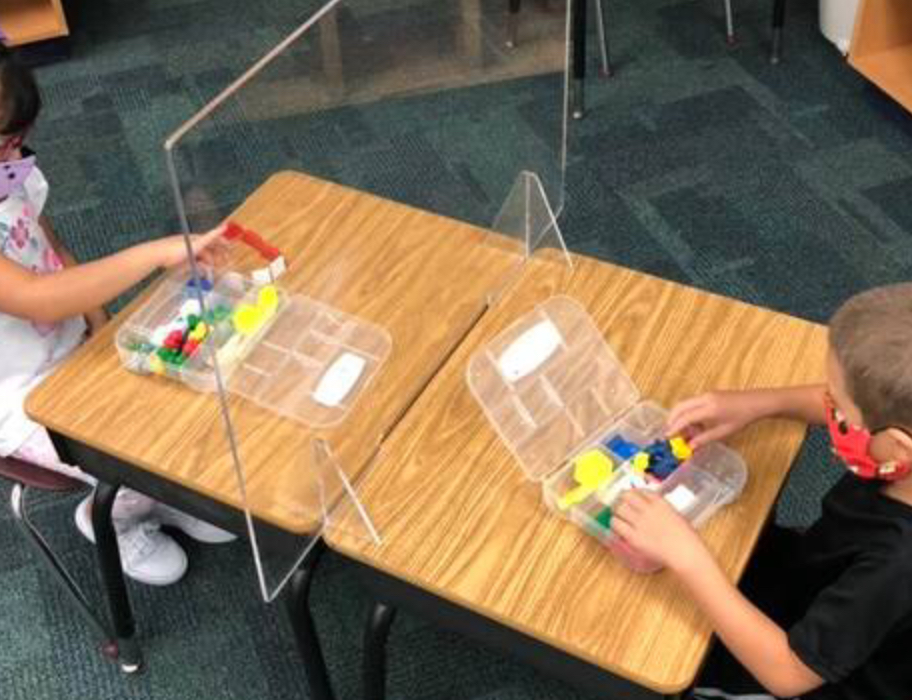
Looking for ways to incorporate interactive play in these days of separation and caution? Playing in pairs can still work with some social distancing hacks :) Use plexiglass or other sturdy see-through materials to set up stations to do paired small-world play! 

Kiddos LOVE to build with all sorts of materials and to make “worlds” where small figures or animals can play. Offer interesting materials, like chucks of wood, twigs, shells, small rocks, glass florist stones, etc. and watch as they construct interesting landscapes. Keeping small tubs to house natural elements spurs children to gather and bring in interesting pieces to add to the bins. Using the plexiglass to separate but bump up against each others’ “worlds” will help build excitement, seeing what their partners are adding and constructing with. Conversations and interactions can still occur, with proper social distancing :) 


Don’t feel trapped by tables either! Use your sneeze guard materials on the floor, with some “tummy time” play, using the same ideas. You will be amazed at how focused some friends will be and able to stay within your social distancing guidelines :) No plexiglass? No problem .... Take those old chart stands, or make a stand from some PVC pipes, and securely drape some sheer shower curtains to divide some space. 


One group I had a few years ago “designed” a Winter Olympics setup - I could see something like this applied to a partitioned play area, geared to individual-but-together play. Little friends like to just construct landscapes with no particular end, so let them create :) 


Play is definitely tricky these days, but try ....

And, have fun!

Thursday, October 8, 2020

Remote Learning: Reading Aloud Tips

In a remote learning model, as in any type of teaching, you have to make choices about best practices for teaching reading. 

Live read alouds can be a wonderful way to connect with your students, modeling reading fluency and how a good reader thinks ... as long as all are engaged :) 

Take the time when doing live read alouds to set norms, just as you would in a face to face classroom. Make sure all of your little ones are ready to settle in :) 

Try these tips to set up ...

  • Start with a simple but calming movement activity before settling in -  a few yoga poses or a shake-it-out settling activity 
  • Have a “cuddle toy” that each child has on stand-by next to their workspace for keeping their hands occupied during reading time. (Might cause a stir at first but will become a commonplace tool)
  • Express “Get comfy” directions and give a short wait time before launching into your story 
  • Consider having reading time as “tummy time” depending on how flexible your students’ tech is - this can help with focus for some and for developing core strength 
  • Use frequent question or recap breaks to stay on task - just like you would in person :) 
  • Try to engage each child by using names when talking and mentioning things in the story. Avoid putting them on the spot but rather invite them to share when appropriate :)

If live reading isn’t feasible, consider using Zoom, YouTube, or another program to save your stories to be listened to independently, but build in the suggestions above. Building in short breaks for thinking about questions keeps your students engaged and encourages them to think about what the story is all about, aiding in their comprehension. 

By recording, you also give the children the ability to revisit a story several times, which promotes deeper thinking and allows them to become more familiar with story elements - win, win! 

Have fun! 


Monday, October 5, 2020

Social Emotional Learning with Karma Wilson’s Bear books

SEL (Social-Emotional Learning) is a big topic these days, with all that is going on in our world. Anxieties are at an all-time high, even with the little ones. Opening up discussions about feelings can get an assist from reading an applicable story. Extend Social-Emotional Learning through thoughtful literature choices, giving children a way to identify feelings and relate them to happenings in their own lives.  

Help kiddos deal with BIG feelings that they might have - read Karma Wilson's Bear books with them. These stories are beautifully simple, and the illustrations, by Jane Chapman, are SO appealing to the kiddos, and draw them right in.   

These Bear books shine a light on one topic at a time, using the familiar Bear and friends characters, and tackle things like making a new friend, not feeling good, feeling scared, and other relatable issues.


When Bear expresses his feelings, pause and invite your students to share their own feelings ... “Does anything make you scared? What do you think is scary? What do you do when you’re scared? What COULD you do?” Opening up these topics lays the groundwork for future discussions or interventions, by establishing common reference points that you can refer back to when those big feelings emerge at a later time, in your class or at home. 

Act out some scenes with your kiddos to really solidify the learning - have them make faces that reflect feelings. Play a guessing game where friends guess how a friend is feeling by their facial expressions. Use emoji cards (super easy to make!) to give ideas :) 

Have fun while exploring feelings!


Friday, October 2, 2020

Remote Learning: Building Community

While your class may not be in-person, or only partially in-person, it’s still made up of people - little people :) 

One of the biggest concerns with remote learning is that students are feeling disconnected and aren't getting the benefits of being in a group. This is where consciously using Social-Emotional Learning (SEL) can help to make the kiddos feel part of things by building bridges between on-line, hybrid and in- person learners. Aside from targeting these feelings with good literature choices and class discussions, what else can you do?

Think about ways to build community amongst your students, in order to promote togetherness and belonging!

Use photos!

  • Distribute class pics to be kept at home or in school (or both)! Have students send in a photo and put them together grid style (with permissions, of course) to be kept on display for reference during lessons, or anytime. 
  • Make class graphs a part of your day! Use those same pictures, individually mounted on index cards or magnets (business card magnets are the best!!) to build bar graphs that tie in with a daily question, or that relate to whatever lessons you are engaged in. This "polling" method gives everyone a voice from time to time and allows them talking points based on commonalities - or even differences!

Consider pen pals within your class!

  • Have your class send artwork/pictures/letters between class members to strengthen bonds. You might even want to switch partners every so often, to mix it up!     
  • A roving paper class pet or something like Flat Stanley can be fun - each member of the class would take a turn having a visit and writing/drawing about it, and forward to the next, if it's doable :)      

Socializing is important for cohesiveness! 

  • Try to make a point of holding a Social Zoom on a regular basis, including all in the class. No lessons - just a fun activity to have them interact. Maybe show and tell or a game to play - or just taking turns telling something that's going on :)
  • Have a silly theme day from time to time - crazy hair, hat, socks, PJs - make it attainable for all :) Teachers - for those who forget on crazy hat day - keep a roll of aluminum foil handy - turn it into a Hershey’s kiss hat! 

Keep the class bonding, learning and belonging - it's so important!

Have fun!!